Locally Sourced, Locally Made – The Power of the Land!!
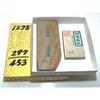
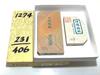
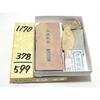
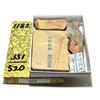
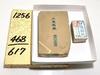
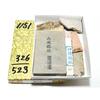
Box dimensions are shown above. Weight indicated is the packaged weight. Please refer to this for size comparison.
The grain is clear, making it easy to work with and yielding a high rate of usable material when dividing the stone. We encourage you to actually try dividing and shaping the stone yourself to verify the properties and performance differences.
It contains a variety of types, sizes, and shapes. For blades you intend to sharpen, use a stone with ample size to create a flat surface. Otherwise, divide the stone into smaller pieces and use it similarly to sharpening Japanese swords.
It is composed solely of **first-class mineral deposits** from the easternmost part of Kyoto City’s Ukyo Ward, along with comparative samples.
The Umegehata whetstone comes exclusively from the areas of Nakayama and Koyama in Ukenouchicho, Umegehata, and from Okudonocho, which is known as the origin of Kyoto whetstones and is highly regarded as the king of layered rocks.
This is a set that doesn’t compromise on quality, avoiding stones bulked up with filler. True quality is revealed by how the stone splits. The stone preparation was primarily carried out by trainees under the supervision of an instructor with over 15 years of experience in the Yamamoto-style forging technique. We believe they have done a good job selecting and dividing the stone to create a colorful assortment, so please check the images.
We encourage you to try splitting it yourself and observe the significant differences in its properties, including the vibrancy of the colors. (Prepare a flathead screwdriver, mallet, safety glasses, and gloves.)
Having even one soft, reddish-pin stone is a real find. (Availability depends on the lot.)
From the genuine, clearly-grained mineral, a film-like slurry easily emerges.
Grinding particles with directionality are arranged on the flakes, resulting in surprisingly strong sharpening power.
The grain size increases as the flakes break down under reduced water flow.
The sliding between flakes is lubricated by the crushed slurry of sticky feldspar and mica minerals, creating a smooth gliding sensation.
Historically, it’s akin to replacing the *konbu* (kelp) used to slide heavy stones for Osaka Castle’s walls with crushed flakes.
Over-applying pressure while sharpening with an excess of uncrushed flakes can create shallow scratches on softer metals due to the overlapping flakes and the strong grinding power originating from Yamashiro Province.
Adjusting the pressure, sharpening angle, slurry amount, and water flow will improve your technique and reduce these shallow scratches.
The visible results make it easy to self-assess and improve your skills, making it a recommended approach.
Experienced flake users will likely find that the *konbu* attack (using a slurry to assist with difficult stones) is very helpful when dealing with stubborn, hard stones that are difficult to sharpen.
It may rekindle your motivation to re-challenge stones you previously gave up on. It’s generally the job of a whetstone artisan to remove unruly grain through forging, but…
The market tends towards shortcuts in manufacturing, prioritizing size and thickness for higher profit margins. This means there’s a good chance you’ll often need to use the soft, reddish-pin slurry.
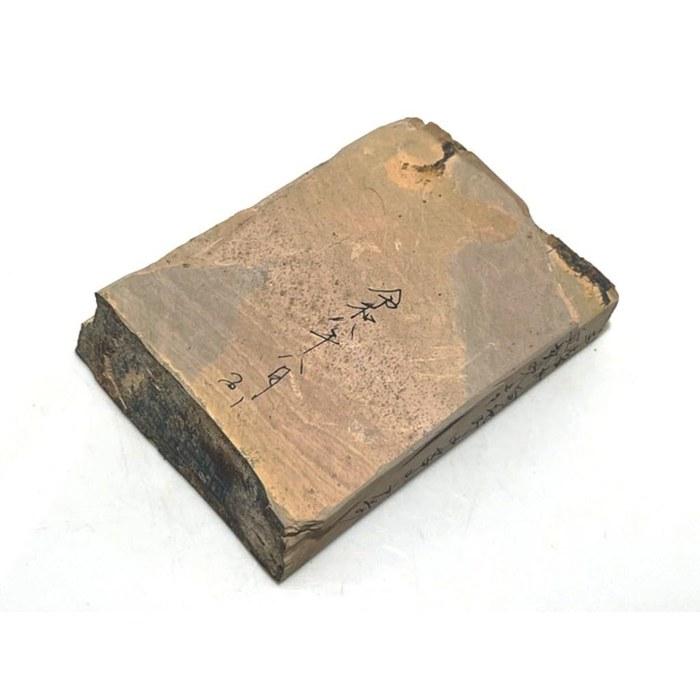
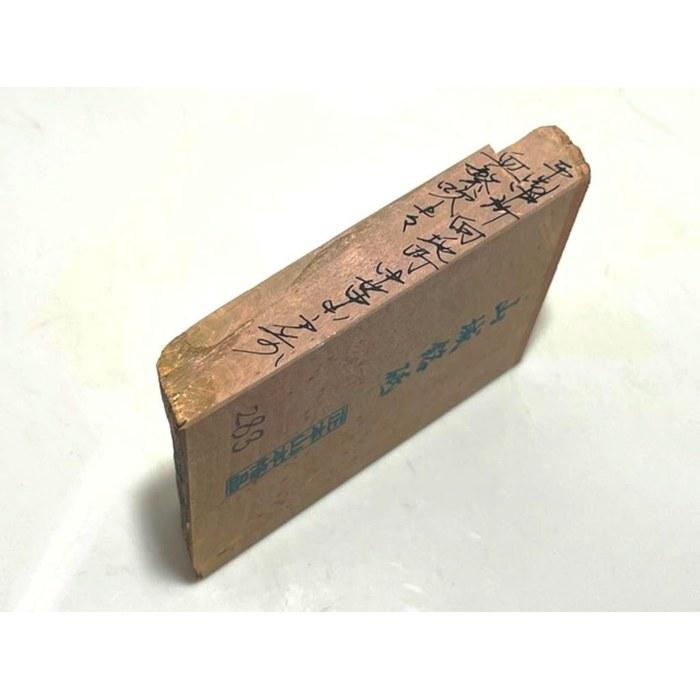
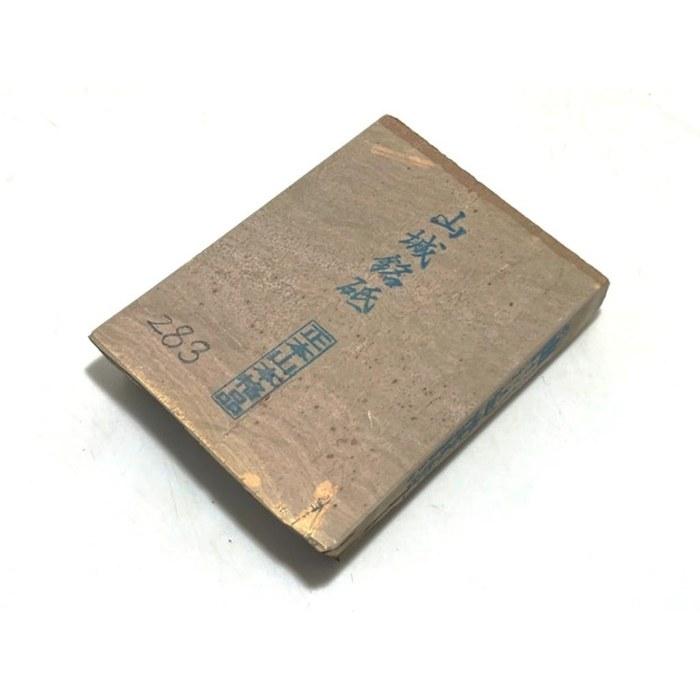
・Includes one finished 260g whetstone. Size is based on the outer dimensions of the box. One stone, including the outer box and rough forging stone, weighs 495g. These are whetstones from Iyū Province and Masamoto/Yamashiro Province, ranging from mid- to high-grade, with the miner personally hand-writing the name to combat counterfeiting and mislabeling. The forging shown in the image is sealed with extra space. The raw stone does not have a name written on it, so please touch and judge its properties yourself. This is geared towards those with a competitive and training-oriented approach.
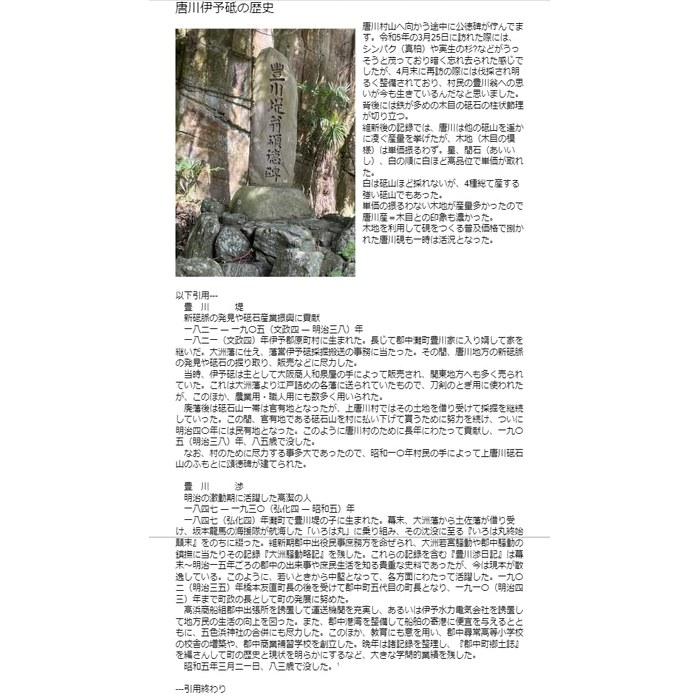
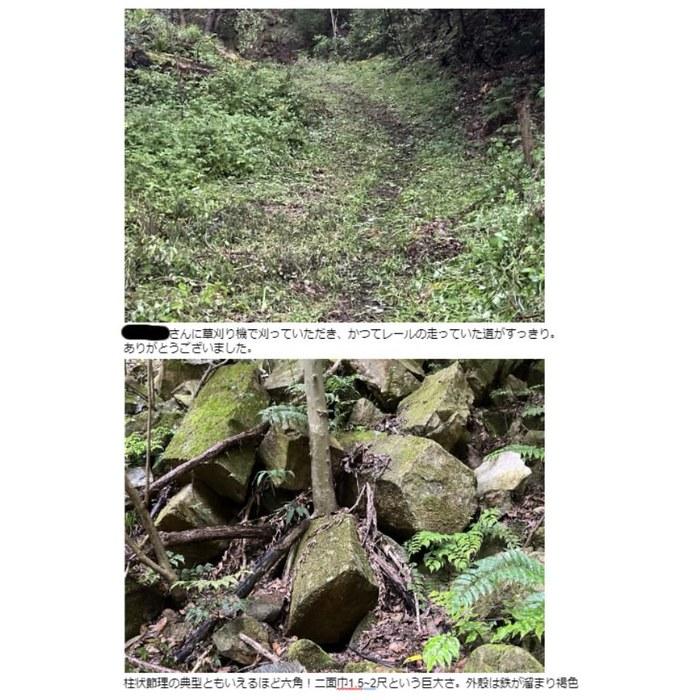
・Neutral and rust-resistant whetstones from Tangawa Village, Iyū Province, revived after half a century!! https://bit.ly/IyoMIkantsubu The outer dimensions of a 10-stone box of Higo-no-kami (approximately): 12 x 15 x 2.8~5.4 cm. Thickness varies. (It actually overflows and bulges.) Total weight including the box is approximately 495g. No gacha element – you will receive the stone shown in the picture.
・Please polish and flatten the forging. If it doesn’t sit well, apply a wet cloth or use silicone adhesive on a non-deformable base. Mining is done with heavy machinery, and cutting is done with diamond tombstone cutters. Regarding the “Iyū Meito” whetstones, we are not involved with products that have been falsely branded or have had names added without authorization. “Iyū Meito” whetstones from around 2007 onwards are made only from *sazare* (pebble) whetstones. All other names are handwritten to distinguish them. We cannot answer inquiries about “Iyū Meito” stones that have been selected and manufactured by others.
・Siliceous shale from Umegehata, Kyoto City, Yamashiro Province. #6,000~24,000 grit. Relatively hard and requires skill, but has a higher probability of becoming refined. Due to the continuous rounded striations, it is difficult to achieve a mirror finish with 70% of the cutting edge retention and an artificial whetstone grit ratio, making it easier to bring out the contrast between the forging line, material, and carbon content differences.
・The harder the stone and the more refined it is, the more it resembles black rock juice. Hardness reduces self-sharpening, so depending on the purpose and skill level, perform *kyōmeikake* (lapping) as needed while sharpening.
【Voltage Compatibility】
When using electrical appliances, please note that they are designed for Japanese voltage specifications (90-110V), so if you use them with a different voltage, it may cause a malfunction.
【Plug Type】
Our products use Japanese plug types (A or B type).
Please use a conversion adapter if necessary.
【Important Note on Transformers and Adapters】
A transformer adjusts voltage to match your device's requirements.
A conversion adapter only changes the plug shape and does not adjust voltage.
Using only a conversion adapter without a transformer may result in damage to the product.
【Liability】
We are not responsible for malfunctions or damages caused by improper use, such as operating the product without a transformer.




 Товар из Японии


 Возврат по недоставке