To continue creating ‘better whetstones,’ what must we do? In a time when whetstones are said to be about “luck” and “compatibility,” let’s not be ashamed to think and consider how to make even better whetstones, and let’s ask everyone around us. Even if they are small or thin, and compact, let's not relax or cut corners, but carefully demonstrate their true purpose as tools. They possess the power to cultivate a spirit of repair that will lead to even better sharpening lives for everyone. Let’s care for them cleanly and brightly, with gratitude for the skilled artisans of Toga. Because of the accumulated history, we can enjoy the convenience and richness of the present. Let’s cherish and protect both what we can see and what we cannot, and never forget it. Let’s properly pass on the intangible assets of the whetstone craftsman and continue to create ‘better whetstones’ so that everyone’s happy sharpening lives will continue.
This is a collaborative sales product of a Kyoto Prefecture-approved mining business cooperative established by multiple whetstone businesses and landowners in Toga, Ukyo Ward, Kyoto City, Naritaki・Umekebata. To produce locally within the business area, our cooperative centralizes joint forestry management, mining, ore selection, and manufacturing to provide more reliable evidence of origin details and contribute to quality control. Since the late Heian period, geological information passed down through the Honma family of the Jingo-ji domain and the Yamamoto family since the early Edo period, along with construction and stone-forging techniques, are promoted through joint ownership and mutual supplementation to eliminate the anxieties of relying on oral traditions and apprenticeship, creating an environment for nurturing future generations and connecting to a long-lasting traditional industry. While geological information is certainly essential, we burn with the desire to create ‘better whetstones’ every day, and by thinking together, listening to everyone, and steadily accumulating effort, we hope that even better successors will be born and ‘better whetstones’ will continue to be created.
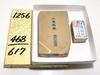
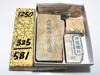
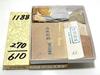
・One finished whetstone (301g) included. Size is indicated by the outer dimensions of the box. One whetstone, including the outer box and rough stone, weighs a total of 422g. Produced in Iyo and Masumoto, with the miner’s hand-written inscription as a measure against origin misrepresentation and imitation for mid- to upper-level renowned whetstones. The finish, as shown in the picture, is sealed. Inscriptions are not applied to stones that have fallen from the original rock, so please judge the material by actually touching it. Suitable for advanced users, including those with competitive and training elements.
・Neutral and rust-resistant Iyo whetstone from Karukawa Village, Iyo, revived after 50 years! https://bit.ly/IyoMIkantsubu The outer dimensions (approximate) of the肥後守10丁 box: 12 x 15 x 2.8~5.4 cm. Thickness varies (actually overflowing and chunky). Total weight with box: approximately 422g. No lottery elements as requested. You will receive the stone as shown in the photo.
・Please polish and flatten the finish. If the seating is poor, use a wet towel or a non-deformable stand with silicone adhesive. We do not participate in the imitation and unauthorized inscription products of “Iyo Meito” whetstones, which are mined by heavy machinery and cut with diamond tombstone cutters. “Iyo Meito” whetstones from around 2007 are made only from gravel whetstones. For this distinction, handwritten inscriptions are used for all inscriptions except for small sizes. We cannot answer inquiries regarding “Iyo Meito” after others have selected and manufactured them.
・Quartz schist from Ukyo Ward, Kyoto City, Kyoto Prefecture, produced in Umekebata #6,000~24,000 grit. Harder, but requires careful kneading to achieve a fine finish. Due to the continuous strip pattern, it lasts for about 70% of its lifespan and is less likely to become a mirror finish compared to artificial whetstone grit, making it easier to draw out contrasts derived from forging lines, material, and carbon content.
・The harder the stone, the more likely it is to be fine and have black rock juice. Because it is hard, sharpness decreases, so sharpen it gradually, performing a namegura throw as needed, depending on the purpose and kneading.
【Voltage Compatibility】
When using electrical appliances, please note that they are designed for Japanese voltage specifications (90-110V), so if you use them with a different voltage, it may cause a malfunction.
【Plug Type】
Our products use Japanese plug types (A or B type).
Please use a conversion adapter if necessary.
【Important Note on Transformers and Adapters】
A transformer adjusts voltage to match your device's requirements.
A conversion adapter only changes the plug shape and does not adjust voltage.
Using only a conversion adapter without a transformer may result in damage to the product.
【Liability】
We are not responsible for malfunctions or damages caused by improper use, such as operating the product without a transformer.


 Товар из Японии


 Возврат по недоставке