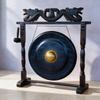
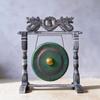
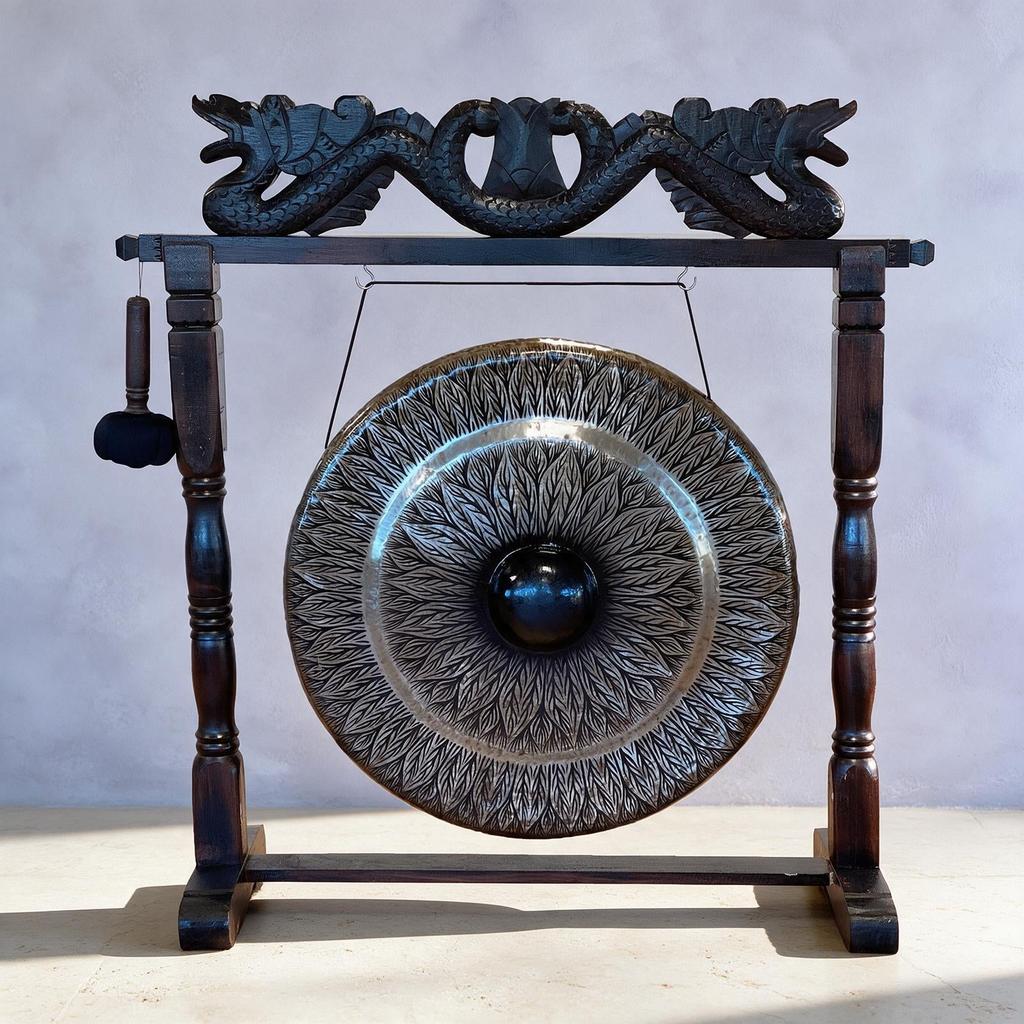
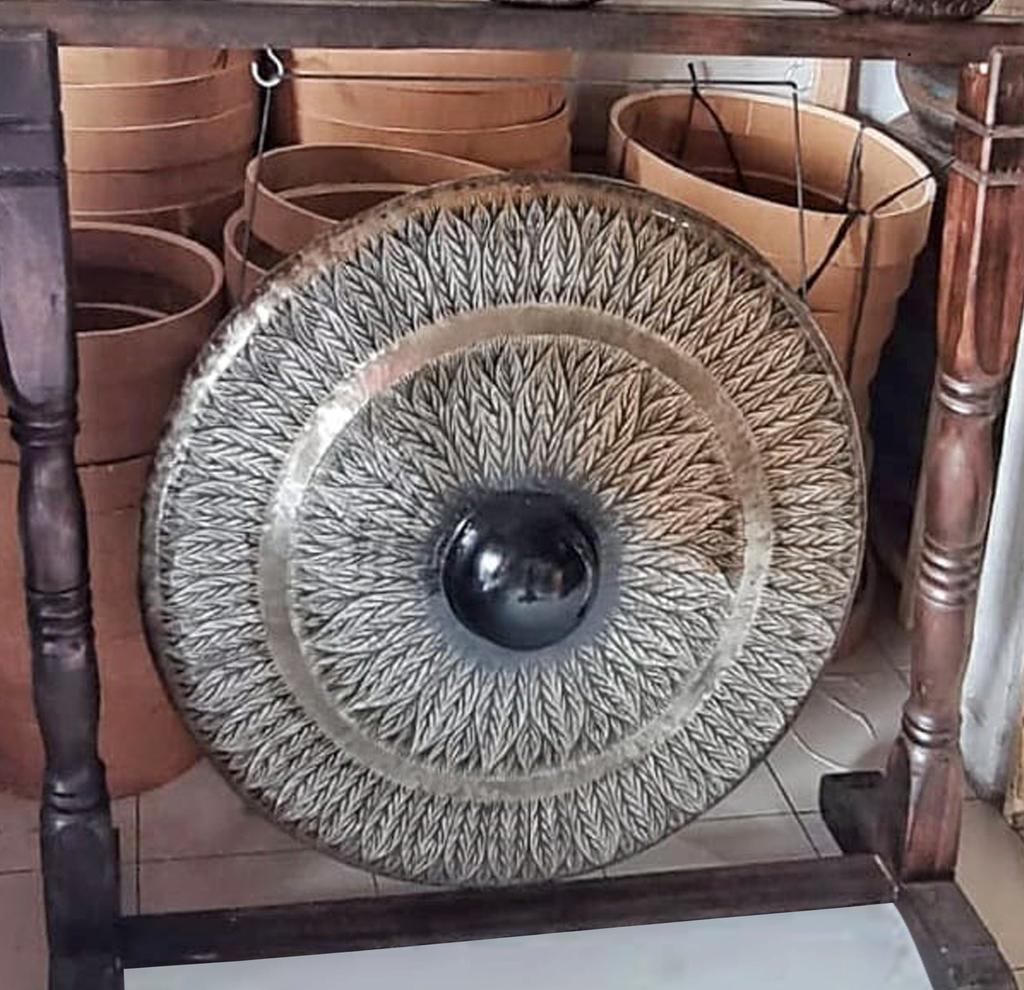
A large black metal gong on a carved Albasia wood stand brings sound, sculpture and ceremony into one steady presence. Struck with care, the disc answers with layered resonance: a shimmer that expands, softens, then leaves the room feeling newly still.
The instrument in the room
The dark metal face gives it a quiet visual weight, more contemplative than decorative.
Its suspended form lets the sound move freely, so the note blooms rather than stops short.
The carved wooden frame turns the gong into a standing piece, suited to a studio, meditation room or spacious home setting.
The sound is not a single clean bell note. A gong carries shifting overtones, with depth and movement in the air.
It suits slow, intentional playing: one strike, a pause, and enough silence to hear the resonance fade.
Black metal, carved Albasia wood
The gong is made from metal and held in a sturdy Albasia wood stand. The black finish gives the disc a calm, grounded look, while the carved frame adds height and presence without feeling ornate for its own sake.
How to sound it
Strike gently and let the tone unfold before playing again. Softer playing brings out a rounded bloom, while a firmer strike creates a stronger wave of sound and more upper shimmer.
Use it as a beginning or closing note for meditation, yoga, breathwork, sound practice, or a simple pause in the day. A gong asks for space around it, both physically and acoustically.
Placement and care
Place the stand on a level floor where it will not be knocked or crowded. Keep the gong dry, dust the metal and wood with a soft cloth, and avoid prolonged damp, which is never kind to wood or metal finishes.
From ceremony to sound practice
This piece is handmade in Bali, Indonesia, and the style is associated with ceremonial use in Bali and Java. In modern homes, yoga studios and sound spaces, the gong is often used to mark transition: the start of a practice, the end of a session, or a moment where attention gathers ar…



 Товар из Великобритании


 Возврат по недоставке