A greenwash metal gong on an Albasia wood stand brings sound, stillness and sculptural presence into one object. The suspended disc draws the eye first, then the ritual begins: one strike, a shimmer of overtones, and the room feels newly attentive.
What you'll notice when it sounds
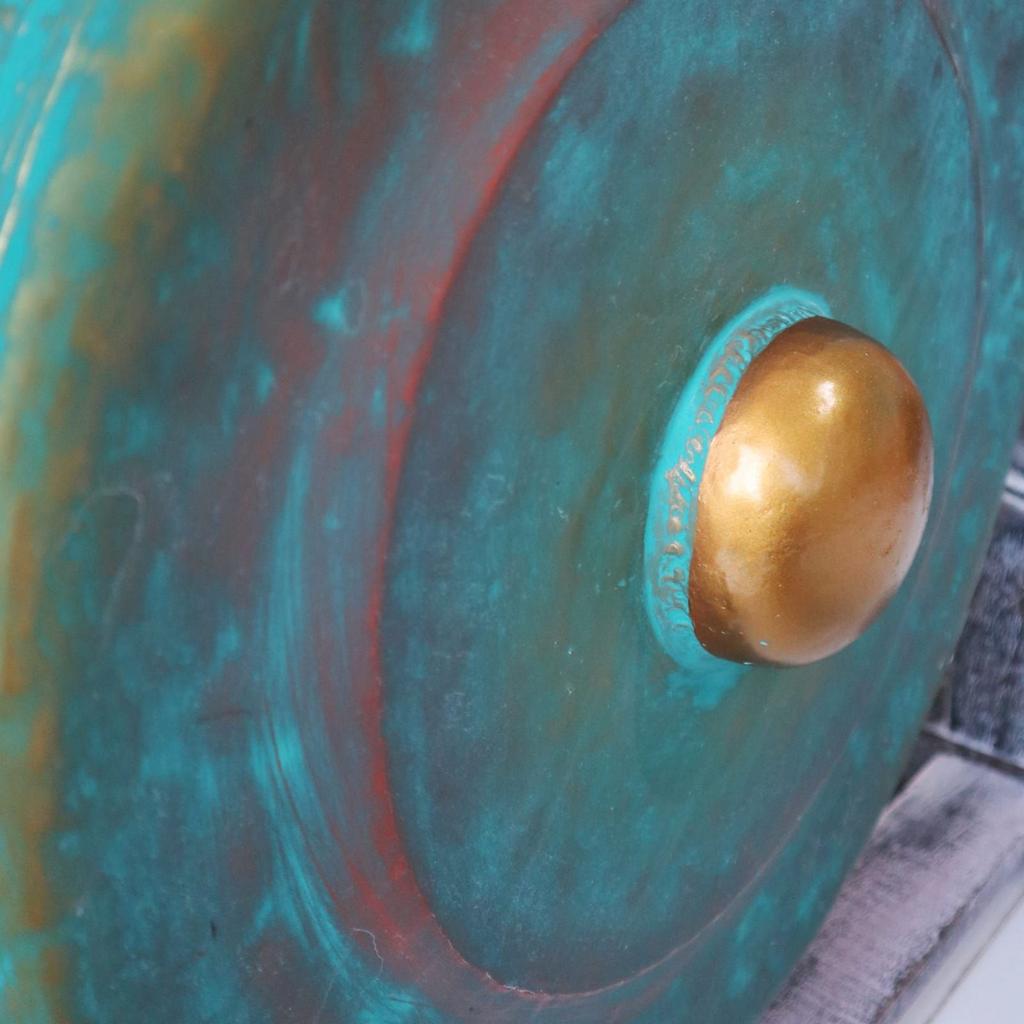
The greenwash finish gives the gong an aged, verdigris-like look, more like a discovered object than a polished ornament.
The metal disc hangs openly in its frame, so it can vibrate freely when struck.
Its sound is layered rather than note-like, with shifting overtones that bloom and fade into quiet.
The carved wooden stand gives it visual weight, making it feel at home in a meditation corner, yoga room or calm living space.
It works as both instrument and focal point, inviting a small pause before or after practice.
Greenwash metal and carved Albasia wood
The gong is metal, held in a carved Albasia wood stand with a greenwashed finish. Albasia is a lightweight wood often used for decorative carving, which suits the open frame and shaped supports.
Its surface has a weathered green tone, chosen for atmosphere rather than shine. It gives the piece a softened, time-worn character without needing extra ornament.
How to sound it with care
Strike the gong gently and let the tone open before playing again. A softer beater gives a warmer bloom, while a harder strike creates a sharper attack, so the feel of the sound depends on what you use and how you play.
Place it on a stable, level surface with enough space around the disc to move freely. Dust the stand with a dry cloth and keep the metal dry, as moisture can mark both wood and metal over time.
From ceremony to studio practice
Gongs have a broad ceremonial and musical life across Asia, from Javanese gamelan traditions to temple settings and contemporary sound practice. This piece is made in Bali, and gongs of this kind are traditionally associated with temple ceremonies in Bali and Java. In modern yoga and meditation sp…




 Товар из Великобритании


 Возврат по недоставке