High-concerned chemical : none
Type : Other
Brand Name : SZYTF
Origin : Mainland China
Condition : New
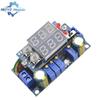
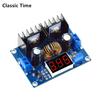
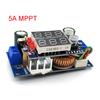
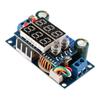
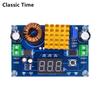
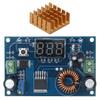
The new force, 5A step-down constant voltage constant current module, with MPPT function, using solar panels to charge the battery can increase the charging current more than double, effectively shorten the charging time and reduce the size of the solar panel. It can charge batteries, lithium batteries, etc., with turn-light control to facilitate observation of the state of charge. It can be equipped with multi-function voltmeter. The input voltage, output voltage, output current and output power can be displayed visually. It can be used completely away from the multimeter. Can be used as a high power LED driver module.
Module parameters:
Module name: 5A step-down constant voltage constant current MPPT
Module nature: non-isolated buck module (BUCK)
Input voltage: 6-36V
Output voltage: 1.25-32V continuously adjustable, (default output 5V.)
1.25-32V fixed delivery for adjustable output
MPPT voltage setting range: 6-36V
Output constant current range: 0.05-5A Long-term working current is recommended within 3A
(output constant current is 3A)
Output turn range: 0.01-5A (lighting current is 0.3A) The current range will have a slight error due to the difference in the part parameters.
Working temperature: -40~+85 degrees
Working frequency: 180KHz
Conversion efficiency: up to 95% (efficiency related to input, output voltage, current, voltage difference)
Short circuit protection: Yes (limit current is the set constant current value)
Over temperature protection: Yes (automatically turn off the output after over temperature)
Input reverse connection protection: none, (if necessary, please input the diode in the input)
Output anti-reverse protection: No, anti-reverse diode must be added when the output is connected to the battery, otherwise the module will be burned out! Remember! (There is a reserved anti-drip diode position, you need to add it yourself. See the description below.) You can also choose our ideal diode, the loss is smaller, the utilization of solar panels is higher.
Charging indication: red light when charging, green light when full. The detection method of the turn signal is current. When using solar panels to supply power, the solar hour charging current is also small, lower than the turning current, and will also light green, but it is not full at this time, please pay attention to distinguish. Using a live meter will see the charging current more directly.
Installation method: 4 3mm silk
Wiring method: terminal block (for the wire when the shell is output) IN is the input, OUT is the output
Module size: length 60mm width 31mm height 22mm (without header)
Note: The current detection of the module is low-end detection. Please do not short the input negative pole and the negative pole of the output directly!
Application range:
1. DIY is a regulated power supply with constant current function. It is not afraid of short circuit during use and can protect the load.
2. Power your electronic device.
3. Charge various batteries, set the charging voltage and charging current according to the battery with different voltage and capacity, with charging indication function, convenient to observe the charging status.
4, using solar panels to power a variety of batteries, with MPPT function, can increase the charging current more than double. With constant current function, it can prevent battery overcharge and effectively protect the battery.
5, drive high-power LED, free combination of serial and parallel,
6, as a car power supply, power supply for your mobile phone or a variety of digital products.
Instructions:
How to set voltage, current and turn lamp: (Please see the above picture)
If the module has no output voltage, please adjust the MPPT setting potentiometer clockwise to the voltage output.
1. Set the output voltage: set the output voltage to the required voltage according to the float voltage value of the battery you want to charge, or the voltage value of the LED after string and parallel connection, and adjust the constant voltage positioner (CV). (without load)
2. Set the lamp current indication: After setting the output voltage, adjust the CC potentiometer counterclockwise by 20 turns, use the multimeter 20A current file to short-circuit the output, adjust the CC potentiometer to the current you need to turn the lamp, and then adjust the turn. The lamp potentiometer is adjusted to just turn on the green light.
3. Set the constant current value: After adjusting the lamp current, the multimeter 20A current file is still short-circuited. (The direct current short-circuit output with voltage and ammeter can adjust the CC potentiometer to the current value you need to set. (When the output current is set by the short circuit method, the actual charging current will be smaller than the short-circuit setting current. The battery should have the residual voltage. If you want to set the accurate charging current, please use the discharged battery to receive the output. Then set the output current.)
Note: When the constant current is set, the voltage should be higher than 1.25V, otherwise the constant current function will be invalid.
4. Set the MPPT voltage value:
A. Adjust the power supply with adjustable power supply: adjust the adjustable power supply to the voltage value to be set (such as 18V), the output is not connected to the load, and the MPPT is counterclockwise when the module has output voltage. Set the potentiometer to the critical point at which the output voltage drops just below.
B. Directly set the solar panel: input directly to the solar panel, set the output voltage according to the load, block part of the light on the solar panel, and output the load. The multimeter measures the output voltage of the solar panel (with the voltmeter cut to the input voltage display), and adjusts the MPPT potentiometer to the solar panel voltage to the maximum power point voltage. (The actual maximum power point voltage of the solar panel will be lower than the nominal voltage, such as 18V solar panels, the maximum power point will be around 17.5V,)
It is also possible to adjust the MPPT value by measuring the output current, and connect the multimeter current file between the output and the load (switching to the current display with the meter head), and adjusting the MPPT potentiometer to the output current to the maximum value.
Note: When using the solar panel to directly adjust the MPPT value, when the power of the solar panel is greater than the load power, please block some of the light on the board to reduce the power of the solar panel, so that the MPPT value can be adjusted.
label:yes


 Возврат по недоставке