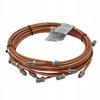
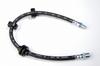
Rigid steel brake hoses in heat shrink sleeve RENAULT ESPACE 4 Full Set
Renault Espace 4
• model years 2002–2014
*After purchase Please send us your VIN number to select the appropriate hose kit.
The kit includes 6 rigid steel brake hoses in heat shrink tubing
• Front left outer 1
• Front right outer 6
• Front left 4
• Front right 8
• Central left 9
• Central right 10
Additionally, we add 500ml of DOT-4 brake fluid to this set
Our ZPHS series rigid steel brake hose kits in heat shrink sleeve are made of high-quality ZISTA-07 class steel pipes, compliant with the PN-EN 10305-1:2016-05 standard and its newer versions.
• Outer Pipe Diameter: 4.75 mm
• Wall Thickness: 0.71 mm
• Precision, seamless, double-walled pipes.
Anti-corrosion Protection:
• Additionally, each hose is equipped with a protective heat-shrink sleeve that protects the pipe from scratches during installation and improves its anti-corrosion properties in the future.
• Rigid steel brake hoses can operate at a working pressure of up to 350 bar, and an additional safety factor of x3.9 means that the burst pressure exceeds 1250 bar. For comparison, in a typical braking system, the maximum pressure reaches approximately 100 bar.
• Steel lines are more rigid than copper alternatives, but still retain appropriate plasticity.
• The pipe stiffens during profiling, so care is recommended when processing it to avoid the need for corrections.
• The GR-01 bender is recommended for profiling steel lines. Using tools that pull the pipe through guides may damage its protective layers.
Ready-to-install kit:
• The lines in our kit are ready for installation – they have the appropriate types of crimps, and the ends have the correct size and thread pitch. Each hose is custom-made and marked with its location, significantly speeding up installation.
• Hose dimensions are precisely matched based on the vehicle manufacturer's technical specifications. Additionally, our technical department checks the correctness of the parts kit based on the VIN, ensuring maximum accuracy and minimizing the risk of discrepancies between catalog data and the actual vehicle condition.
High-grade galvanized steel terminals:
• The hose terminals in ZPHS kits are made of high-grade galvanized free-cutting steel, providing them with high corrosion resistance. Each terminal is manufactured in Poland, guaranteeing the highest quality and compliance with European standards.
• ZPHS/M and ZPHS/I versions are also available, with brass or stainless steel terminals.
• The hoses are delivered in coils, properly protected for transport. They require profiling before installation. A bender can be used for this, but a skilled mechanic can also handle it without specialized tools.
• This product is intended for professional use. Service should only be performed by a qualified specialist.
• Rigid steel brake hoses with heat shrink sleeves are the perfect solution for customers looking for the highest quality products that will keep their vehicle in compliance with factory standards. They guarantee durability, reliability and aesthetics, ensuring many years of trouble-free operation.
FAQ – Frequently Asked Questions
1. What are the advantages of rigid copper brake lines:
Copper lines are corrosion-resistant, making them ideal for highly corrosive environments. Additional advantages of copper wires include:
• Easy to make crimps and swells – Copper is easy to work with, so crimps and swells are easier to make, and basic, simple tools are enough.
• Faster installation and profiling – The ductility of copper makes the wires easy to shape, which shortens installation time and makes replacement less complicated.
• Economical choice – Copper wires are a cheaper alternative to steel wires, allowing for a low-cost restoration of full functionality to older vehicles.
2. What are the disadvantages of copper pipes?
• Copper pipe is less mechanically durable than steel pipe, but its strength parameters significantly exceed the loads typical of braking systems (the minimum burst pressure is 7x higher than that in the braking system).
• Copper can also electrochemically react with steel fittings or aluminum components, which over time can make disassembly of components difficult. For this reason, copper pipes are primarily intended for "disposable" use; there is a high probability of damage to the pipe during disassembly - and after each disassembly of a rigid pipe, it is recommended to perform new swells.
(To eliminate this problem, you can use our fittings made of brass or stainless steel).
3. What are the advantages of steel pipes over copper pipes?
Rigid steel brake pipe sets are characterized by higher mechanical durability and are used by most manufacturers for so-called First assembly. At PHU DONOCIK, we use additional protective heat-shrink sleeves to increase their anti-corrosion properties.
Steel lines are a premium product for demanding customers who want to maintain the vehicle's factory quality over long periods of use. Steel brake lines can also be made with brass or stainless steel fittings.
4. What are the disadvantages of steel lines?
• Steel lines are more demanding to process – crimping and upsetting require specialized tools and higher skill levels.
• Profiling and installation are more difficult than copper lines, so replacement is recommended for experienced mechanics. The longer installation time means higher replacement costs.
• Steel lines also have lower corrosion resistance than copper lines, requiring additional periodic inspections.
5. Summary:
Both types of lines ensure long-term and safe operation of the braking system. The choice of material depends on the user's preferences: copper lines are an economical, easy-to-install solution, ideal for older vehicles, while steel lines are an option for customers who value durability and factory quality for years to come.
What should I choose: copper ZPHM or steel ZPHS?




 Товар из Польши


 Возврат по недоставке