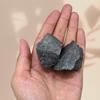
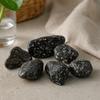
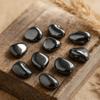
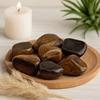
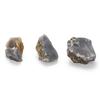
Dark, weighty-looking and naturally metallic, these hematite specimens bring the feeling of raw geology into the hand. This set of about 20 hematite specimens from Morocco is for anyone who loves minerals in their unpolished state, with glossy black surfaces, earthy brown matrix and the quiet drama of iron oxide shaped by the earth.
Black sheen, raw texture and natural variation
The surface catches the light with a steel-like gleam, shifting from deep black to silvery grey across broken planes.
Some pieces show rounded, bubble-like forms, giving the mineral a tactile, almost molten character.
Earthy brown areas appear beside the darker metallic sections, adding contrast and a more rugged collector feel.
The raw form keeps each piece individual, with natural edges, pits, marks and uneven surfaces.
Hematite is known for leaving a red streak when scratched, a distinctive clue to its iron-rich nature.
Iron oxide with a metallic presence
Hematite is an iron oxide mineral, widely found at the earth’s surface and recognised for its dark colour and metallic sheen. Its visual appeal comes from that contrast: a stone that looks almost black in shadow, then flashes with a polished-metal brightness as the light moves across it.
How to display and handle it
Place the pieces in a shallow bowl, on a mineral shelf, or beside other raw crystals where their dark lustre can stand out. Handle them as natural specimens rather than smooth decorative stones, as raw edges and surface variation are part of their character.
Hematite in collection and tradition
For mineral collectors, hematite is valued for the way iron gives it both weighty visual depth and a striking metallic finish. In crystal traditions, hematite has also long been associated with protection, which gives the stone a symbolic layer beyond its geology. Here, that meaning sits quietly alongside the material facts: dark iron oxide, natural texture, and a surface that feels closely connected to the earth …
region of manufacture: Morocco


 Товар из Великобритании


 Возврат по недоставке