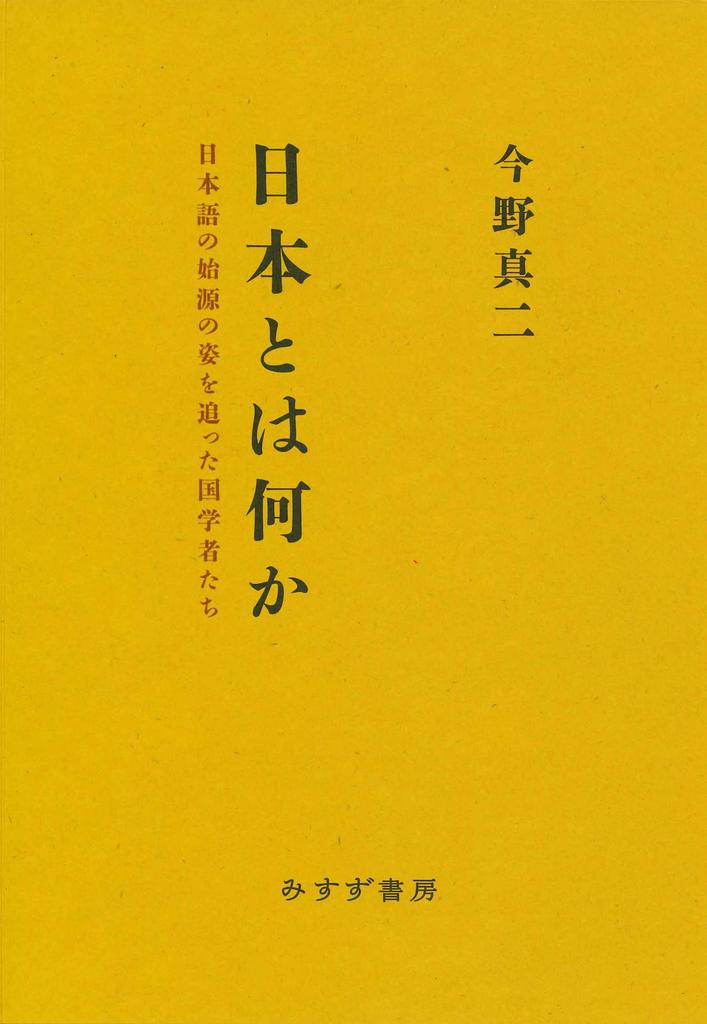
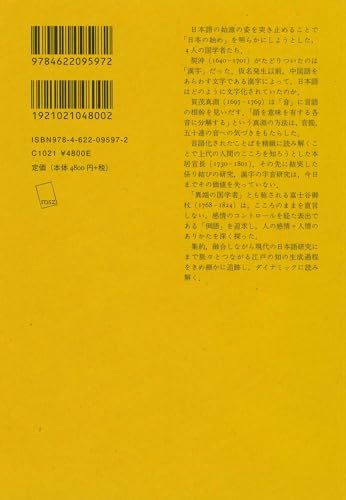
Четыре специалиста по японской классической литературе попытались раскрыть «начало Японии», прослеживая истоки японского языка.
Кэйтю (1640-1701) прибыл к «иероглифам». До развития каны, как писался японский язык с использованием китайских иероглифов, которые изначально представляли китайский?
Камо-но Мабути (1697-1769) основу языка нашли в «звуке». Метод Мабути «разложения слов на значимые звуки» привел к осознанию слогов и последовательностей из пятидесяти звуков.
Мотоори Норинага (1730-1801) стремился понять сердца древних людей, тщательно расшифровывая письменность. Его исследования грамматического согласования и произношения китайских иероглифов, кульминацией которых стала эта работа, остаются ценными и по сей день.
Фудзитани Мицуэ (1768-1824), иногда называемый «еретическим ученым японской классики», стремился к «перевернутому языку» — выражению, которое избегает прямого излияния эмоций и вместо этого подвергается эмоциональному контролю, глубоко исследуя природу человеческих эмоций и человеческих чувств.
Эта книга тщательно прослеживает и динамично интерпретирует процесс порождения знаний, который, посредством накопления и слияния, продолжает связываться с современными исследованиями японского языка.
Оглавление
Вступление: Эпистема Эдо
Две эпистемы / Чтение древних текстов / Деконструкция языка / Подход к «эмоциональной информации» — Металингвистика и поэзия вака / Исследование придворной культуры через игру сугороку (настольная игра) / Динамические междисциплинарные исследования в период Эдо / Вселенная Норинаги
Глава 1: Филолог Кэйтю
я. Исследование Кэйтю *Манъёсю* — Организация манъёганы
Текст «Сэйго Кана-хэн» (Правильный язык и символы кана) / Современные методы и метод Кэйтю / Различные «Я не могу это прочитать» / Подход Кэйтю - Внимательное чтение китайских классических текстов, санскрита (Сиддхам) Исследование / Различие Делает Общение Возможным
2. Является ли *Вадзи Сэйран Сё* книгой по орфографии на кане?
От *Манъёсю* до *Вадзи Сэйран Сё* / *Вадзи Сэйран Сё* - Достижение японского языка, написанного китайскими иероглифами / Представление мыслей с помощью схем
3. Дебаты с Татибана но Нариаки
Критика *Waji Seiran Shō* - *Waji Kokon Tsūrei Zensho* / Опровержение Кэйтю - *Waji Seiran Tsūhō* «Отрывок» и «Основные замечания по исправлению и уничтожению японских иероглифов» / Правда и поэзия вака
IV. Осведомленность об этимологии и альтернативных названиях — Чтение «Энцзюань Дзакки»
Об этимологии / Об альтернативных названиях
Глава вторая: Камо-но Мабути — Восприятие, основанное на опыте и интуиции
я. """Кандзи Ко"""
Аматобуя / Нуэгуса но
II. Интуитивный подход и логика
Сердце Древних Времен / Мабути и Норинага
III. Составление и понимание поэзии — Практическая интерпретация
Преданное сердце / Мысли в сердце Превращение слов в песни / Выражение эмоций
IV. Пионерская работа по фонетической интерпретации с использованием японской слоговой азбуки
"""Кана" и японская слоговая азбука / Фонетический взгляд на словообразование / Сеть знаний / Теория отложенных и сокращенных форм / Сегодняшняя лунная ночь / Заключение"""
Глава 3: Мотоори Норинага
я. Грамматическая схема — «Тэнивоха Химо Кагами»
Осознание «какаримусуби» — Передача из Средних веков в период Эдо / Наблюдение за «Тэнивоха Химо Кагами»
II. Показ произношения кандзи с помощью каны — — «Произношение китайских иероглифов и использование каны»
"""Кана Цукаби""" и """Произношение китайских иероглифов и использование каны""" / Написание китайских слов каной / Обозначение звуков китайских иероглифов каной"""
3. Разговорный язык как металингвистическая функция
Металингвистическая функция — Объяснение языка языком / Приобретение металингвистической функции / Металингвистические функции, такие как «Древний язык» и «Деревенский язык» — «Shiyō Shinga» Фудзитани Мицуэ / Подход, основанный на тексте / Конкретное и абстрактное в текстах / Японский язык за пределами Японского архипелага — «Tōwa San'yō» Окадзимы Канаимы / Различные формы японского языка в пределах Японского архипелага Слова — *Butsurui Shōgo* Годзана Косигая
IV. Метод Норинаги — *Кокинсю Энкё*
Обзор *Кокинсю Энкё* / Как постичь гуманистическое знание / «Первая встреча» с Мабути / Заметки на полях / Чтение Норинаги / Вербализация человеческих чувств и эмоций / Метод классической филологии — От Огю Сорая до Мабути и Норинаги
В. Дебаты с Уэдой Акинари — «Кагари Ёси»
Обзор «Кагари Ёси» / Дискуссия в первом томе «Кагари Ёси» / Быть националистом и быть логичным / Позиционирование устной речи / Заключение
Глава 4: Теория перевернутых слов Фудзитани Мицуэ и дух слов
1. Еретический Национальный Ученый
Эпоха Мицуэ / Недифференцированные тексты / Оценка Мицуэ в XX веке
2. В поисках «Истинных Слов» через поэзию
Состояние человеческого сердца / Что такое поэзия для людей? — Поэтическая теория «Сингон Бэн» / «Практика и тренировка» поэзии — «Кадо Хисуй Сё» / «Свет», освещающий классику
3. Различные лингвистические находки
Шесть Движений / С акцентом на «Аюи» (связывание ног) техника — «Аюи-сё» и «Хайкай Тэндзиха-сё» / «Вака Ирэхимо» / Разговорный язык как металингвистика — «Сиё Синга» / Коммуникативный язык и поэтический язык
IV. Теория инвертированных слов и Котодама
Вывод
Последняя Глава: Поэтический язык и национальные ученые
Что означает для национальных ученых сочинять поэзию вака / «Син Кокинсю Мино но Иэдзуто» Мотоори Норинаги / «Чувство» «Преемственности» среди национальных ученых / Быть близким к человеческим чувствам / Связь между человеческими чувствами и мыслью
Заметки
Постскриптум

 Товар из Японии


 Возврат по недоставке







![Великий словарь японского языка Дополнительный список кандзи, диалектных источников [2-е издание] Указатель тома, Указатель,](https://img-edg.joomcdn.net/31e8e8cf81d5d9d6c26322161474c5bdce6e6009_78_100.jpeg)