Iyo Province natural whetstones are believed to have circulated in the Seto Inland Sea as early as the Kofun period, and are renowned as the foremost producers of branded whetstones within the world’s oldest and largest class of volcanic rock systems, with a history of over 1,500 years.
Our nation’s branded whetstone resources possessed the power to change entire ethnicities and nations.
The lack of iron ore and being a latecomer due to unique bloomery smelting, vastly inferior to the yield achieved through it, and being located on a remote island in the Far East, constituted a fatal condition, like losing a limb, when it came to creating ironware civilization.
The consumable goods that allow for the processing of harder and more resilient iron products at will are our nation’s branded whetstone resources—this is confirmed by examining history and tradition.
Until the 19th century, the performance of natural whetstones dominated ironware development.
■ Possessing the world’s oldest and largest wooden structures, despite poor location conditions, comparable to the world’s finest.
■ The superb technique of Japanese swords, a product of exceptional skill in ironware. A world where warriors wagered their lives on each sword lasted for 700 years.
■ Despite being a latecomer to a remote area, it achieved the invention of the world’s leading iron products in the Middle Ages, leading to its current recognition as a manufacturing powerhouse.
From before recorded history until the mid-1980s, the age of iron. That is to say, the ability to produce iron was not only essential for manufacturing but also served as a medium for weaving together the maturity of culture and nation.
Rare and difficult to obtain, overflowing with uniqueness and authenticity, the branded whetstone resources overcame countless layers of adversity.
If we measure our nation’s various resources based on the values of the modern era, when petroleum and nuclear power were considered valuable, we could be considered a resource-rich nation.
The strength gained only through overcoming scarcity and hardship illuminates history and tradition, and imbues them with soul.
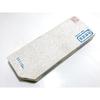
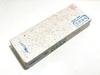
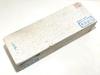
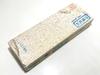
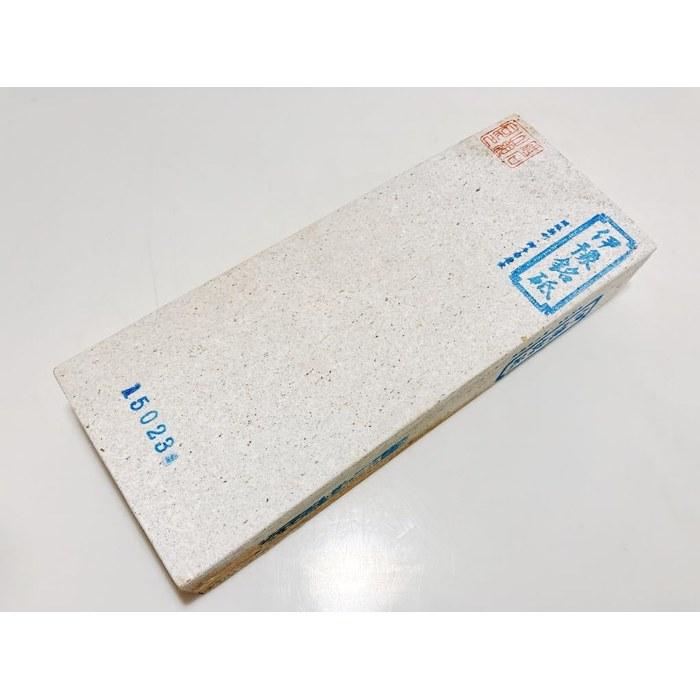
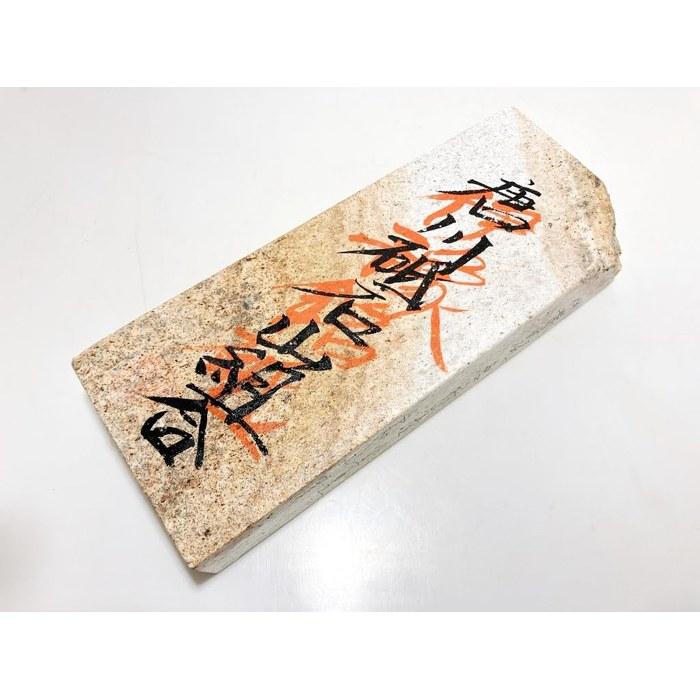
・74 x 189 x 37 mm, 1,145g. Produced in high-altitude areas such as the former Hirota Village of Iyo Town, with a neutral acidity unlike other volcanic rocks with difficult acidity, making it less prone to rust and easy to use—hard, tenacious, fine medium to fine grit.
・In addition to the operating expenses for mining, we will return a portion of the sales of the Tangakawa Whetstone Mountain Association seal products back to the association. By using it every day, you will directly deliver your appreciation to Tangakawa, which possesses the authentic Iyo branded whetstone mountain. Unlike the acidic varieties common outside the former Iyo Town, the neutral nature makes it relatively rust-resistant and easy to manage. Hand-mined and hand-split, carefully shaped on the stone plate by reading the grain. Optimal solution for switching cutting patterns with high-speed steel, creating strip-like cross-sectional shapes. Therefore, while slate whetstones are not essential, their absence can be problematic. Therefore, it is best to start with rust-resistant neutral Iyo whetstones. The "Iyo Branded Whetstone" designation, from around 2007, refers only to pebble branded whetstones. We cannot answer inquiries regarding other selections and manufacturing labeled as "Iyo Branded Whetstone."
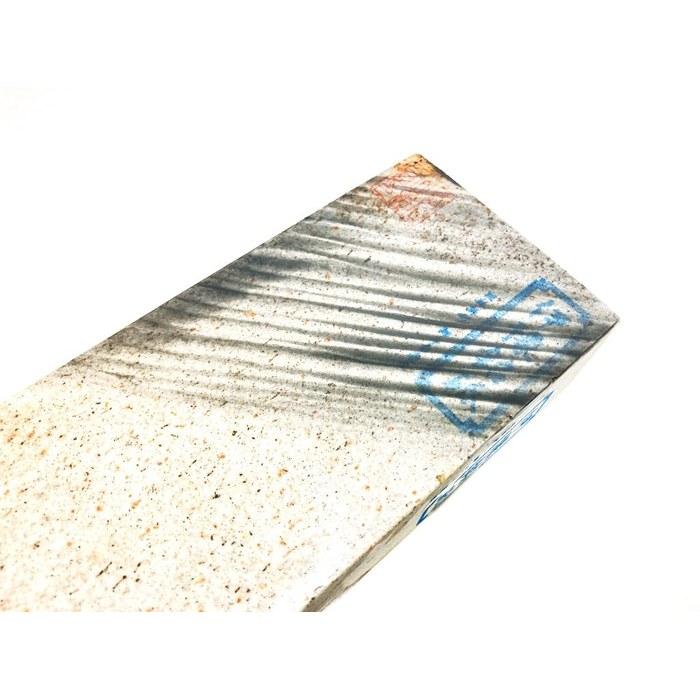
・Rough-faced metamorphic rhyolite and andesite produced in Iyo City, Ehime Prefecture, Japan. #1,000~5,000 grit. Tends to be hard and fine. The strongest retention of hardness and tenacity. Neutral, with rust resistance unlike other Iyo whetstone mountains. Sharpening ability is improved when creating scratches with diamonds #400 or lower. Recommended over Komane-kura. Due to the continuous strip pattern on the rounded bottom, it lasts a long time at approximately 70% of its cutting edge and is less likely to produce a mirror finish compared to artificial whetstone grit, making it easier to draw out contrasts derived from differences in forging lines, material, and carbon content.
・Tends to be harder and finer in proportion to the amount of black rock juice. Because hardness reduces self-sharpness, sharpen gradually while periodically performing Komane-kura sharpening according to the purpose and level of skill.
【Voltage Compatibility】
When using electrical appliances, please note that they are designed for Japanese voltage specifications (90-110V), so if you use them with a different voltage, it may cause a malfunction.
【Plug Type】
Our products use Japanese plug types (A or B type).
Please use a conversion adapter if necessary.
【Important Note on Transformers and Adapters】
A transformer adjusts voltage to match your device's requirements.
A conversion adapter only changes the plug shape and does not adjust voltage.
Using only a conversion adapter without a transformer may result in damage to the product.
【Liability】
We are not responsible for malfunctions or damages caused by improper use, such as operating the product without a transformer.




 Товар из Японии


 Возврат по недоставке