Quantity : 1
High-concerned chemical : none
Package : TQFP
is_d : Yes
Supply Voltage : DC-AC Inverte
Application : As Description
Type : Voltage Regulator
Brand Name : DIY NOW
Origin : Mainland China
Condition : New
Operating Temperature : As Description
Condition : New
Type : 150W DC-AC Converter
Key Word : Booster
Dropship : Support
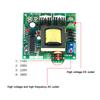
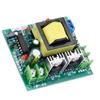
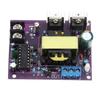
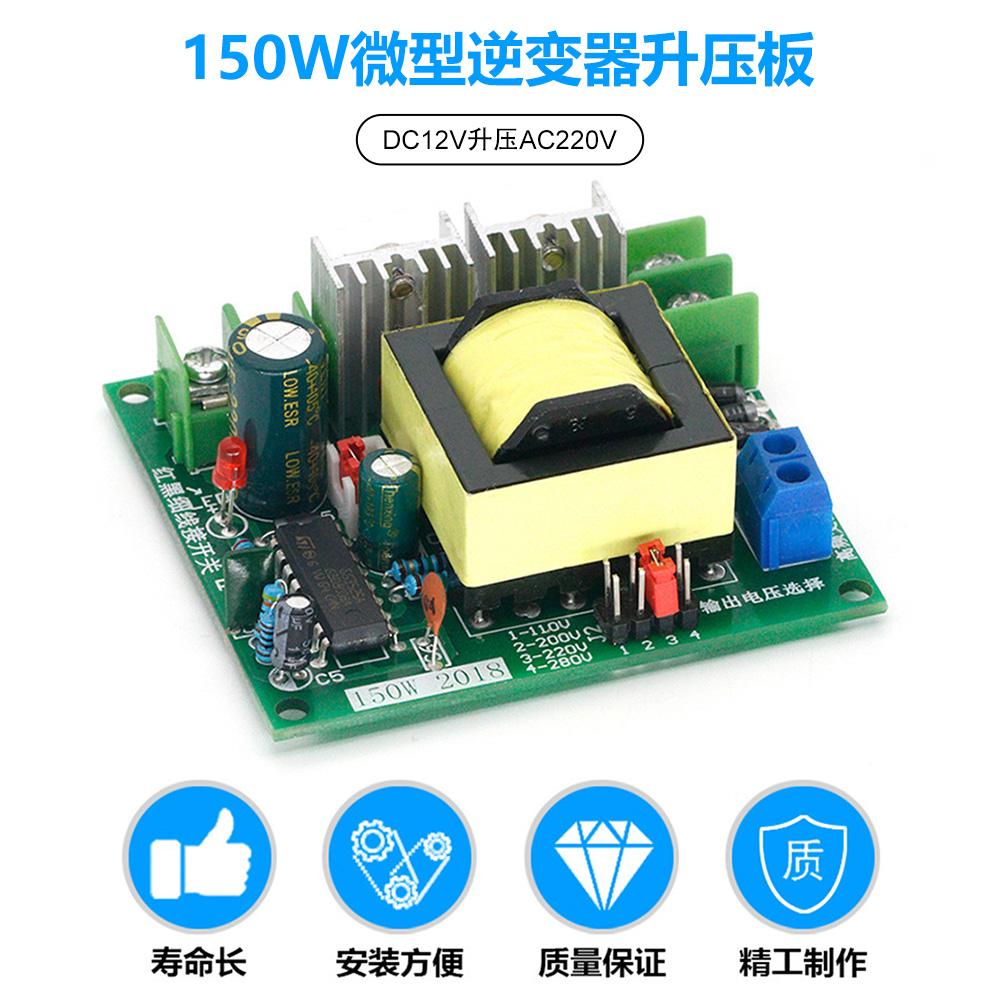
150W DC-AC Converter Booster Module 12V to 110V 200V 220V 280V 150W Inverter Boost Board Transformer Electronic kit
Feature:
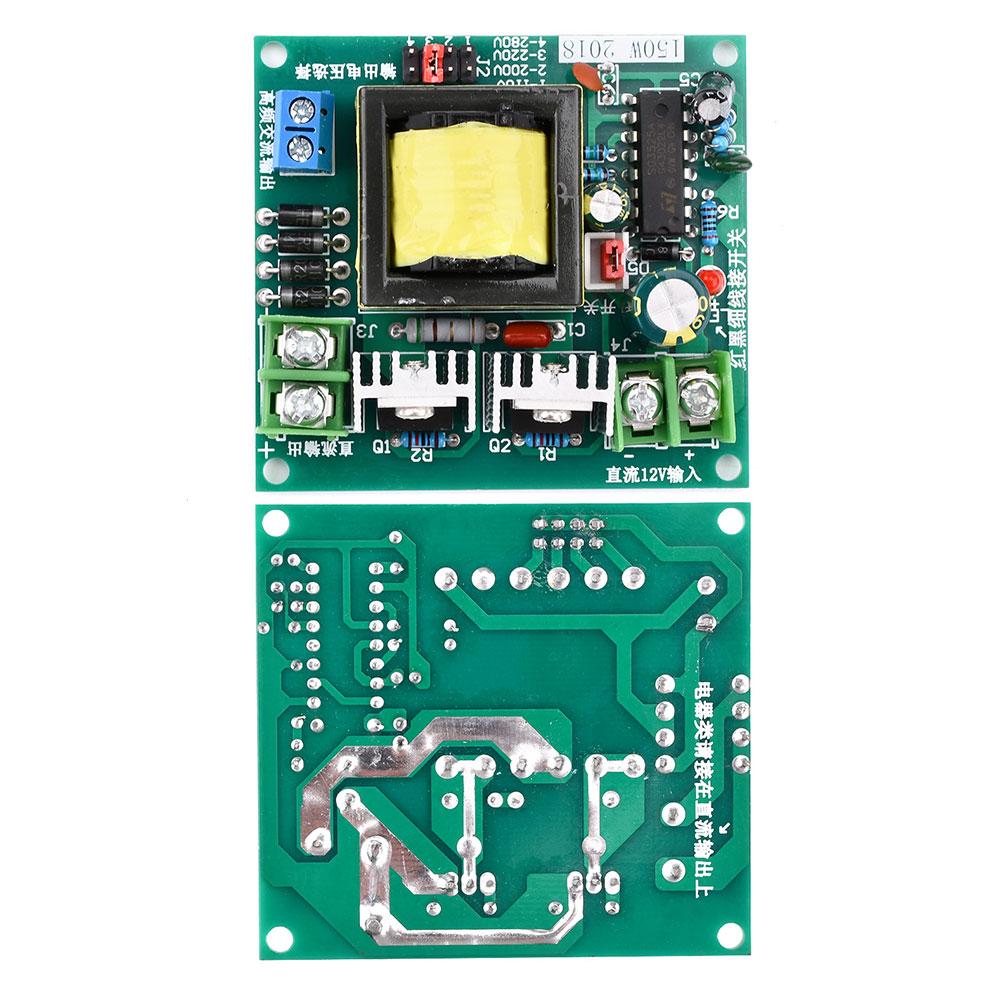
1. No need for welding, the input terminal uses 7.62 terminal blocks
2. High-frequency AC output uses blue 301 terminal blocks, and DC output uses 7.62 terminal blocks
3. The voltage can be selected arbitrarily, through the jumper cap, no need for welding
4. The output power is large. If there is a fan for heat dissipation, this board can output 200W power and use a double-sided circuit board
5. The AC output can be connected to a double voltage rectifier or a pure resistive load
Product parameters:
High-frequency AC output port: only suitable for resistive loads, such as ordinary household incandescent bulbs (tungsten filament bulbs), ordinary soldering irons, or connected to double voltage rectifier circuits. Do not measure this output port when measuring the output voltage, because these voltmeters are designed to measure 50Hz household voltage, not high-frequency voltage, and huge measurement errors will occur.
DC output port: You can use the DC range of the multimeter to measure the voltage, and you can carry a switching power supply load (appliances marked with an input voltage of AC100-240V can be used), and a resistive load. 150W inverter battery DC12V to AC220V step-up transformer power conversion circuit board.
Switch: The red and black lines on the board are switches, which are used to control the presence or absence of high-voltage output.
Input voltage: 12V, limited input voltage 8V, limited input voltage 14.8V. Since there is no input fuse on this board, please add the fuse yourself. It is recommended to add a 15A fuse (lithium battery power supply and switching power supply, DC power supply, this type of power supply will cause the tube to overheat and burn out when the power supply is insufficient). The output is not stable, and the input must ensure sufficient power (current), otherwise it is easy to burn the tube.
Output voltage: 110V 200V 220V 280V
Output waveform: high-frequency square wave or DC (unfiltered)
Output power: 150W (please add fan for cooling above 100W)
No-load 12V terminal current: 250 mA
Working frequency: 27KHZ
Protection: No protection, please add fuse by yourself
Notes:
Applicable electrical range: Switching power supply load, generally marked with input voltage 100-240V electrical appliances can generally be used, such as non-copycat mobile phone chargers, set-top boxes, DVDs, LED lamps (there are constant current drivers, so some can be used, some LED lamps cannot be used, when using, can only be connected to the DC output port, never to the high-frequency AC output port) ordinary tungsten filament bulbs, small hand drills, energy-saving lamps, ordinary non-temperature-adjustable electric soldering irons, circuits that require high-voltage voltage doubler rectification, LCD TVs connected to the DC output port, etc.
Unusable electrical appliances: iron core transformers, such as audio equipment using iron core transformers, thermostats, dimming lamps, AC motor loads such as electric fans. Cheap RC step-down LED lamps (such as LED night lights, straw hat LED lamps, LED lamps with plastic shells)
Note:
1. It is best to connect to the "DC output", because the rectifier part of this type of appliance uses ordinary rectifier tubes. Connecting to the "high-frequency AC output" will cause the rectifier diode of the appliance to heat up and break down, and the appliance diode will be damaged. Eventually, the boost module board will burn out. Connecting the switching power supply to the DC output can reduce the boost board temperature.
2. This board has high-frequency square wave AC and DC output, so it cannot be used with general inductive appliances: motors, electric fans, coil transformers (such as power amplifiers and speakers), simple capacitor step-down small appliances, cheap RC step-down LED lamps (such as LED night lights, straw hat LED lamps), thermostatic soldering irons...
3. When connecting small loads (LED lights, mobile phone chargers, DVDs, set-top boxes, etc.), it is recommended to connect to a lower output voltage level such as 200V.
4. When working for a long time with a large load (≥100W), it is recommended to increase the heat sink or add a fan for heat dissipation.
5. The power supply cannot be connected in reverse. In addition, the power supply and power cord must have a large enough current (a thick enough input power cord is required to ensure the output. The converter converts low-voltage and high-current into high-voltage and low-current. For example, when the output is 100W and the input is 12V, the current needs to be about 9A)
6. Do not overload or short-circuit the output.
7. The multimeter will show a high voltage when measuring the high-frequency no-load voltage at the output end (this is incorrect, not the actual voltage, because the multimeter is designed for 50HZ or 60HZ low-frequency AC, not for high-frequency AC, which will result in huge errors in the test results. Some customers even tested 800V voltage)
8. The problem of DC output voltage test, because the DC output end of the boost board is not connected to the filter capacitor, and this type of transformer will have certain spike pulses when converting, and the measured voltage will be high when no-load, which is normal.
9. Because it is a bare board with high output voltage, pay attention to safety when using it. Do not place it on a conductive table, such as a metal table, away from the battery terminal, to avoid accidental impact, and connect the input and output lines. After switching, check that everything is correct before powering on.
Package list:
Inverter X1
label:yes




 Возврат по недоставке