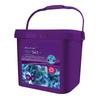
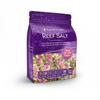
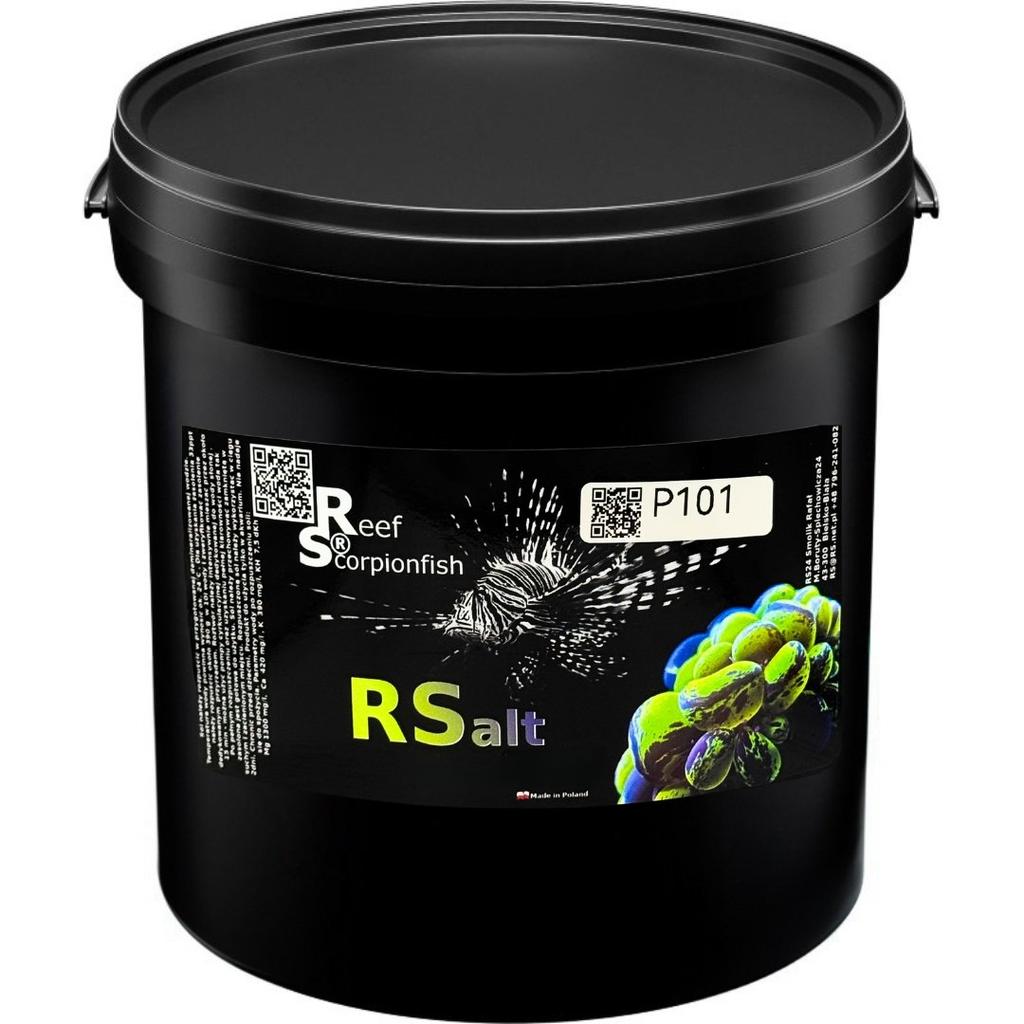
Synthetic sea salt created with coral breeding in mind. The salt's composition has been selected to create the best possible conditions for marine animals. The micro and macro elements it contains fully meet the corals' needs for proper growth and coloration.
When setting up new aquariums, we recommend introducing the first animals no sooner than 10-14 days after filling the tank.
Dissolve the salt in prepared, demineralized water. The water temperature should be approximately 24°C. To achieve a salinity of 33 ppt (1.025 S.G.), dissolve approximately 390 g per 10 liters of water.
Stir the solution vigorously for approximately 15 minutes. Once fully dissolved and the water is completely clear, the salted salt is ready for use. The salt should be stored in a dry and shaded place.
Dissolved salt should be used within 5 days. Evaporation changes water parameters, so keep the prepared brine tightly closed. If storing the prepared brine for several days, check its salinity before use.
Keep out of reach of children. This product is for aquarium use only. Not suitable for consumption. A safety data sheet is available upon request.
Aquaforest products are manufactured in the European Union under strictly controlled laboratory conditions to meet the highest quality standards. Each product is made from carefully selected raw components/raw materials in quantities that guarantee a uniform composition.
Each of our batches is tested using ICP-OES before packaging the salt. Since May 2017, we have introduced the ability for customers to view results online.
How is sea salt tested?
We mix our sea salt (each batch weighs 1 ton – 2204 pounds) and take three separate samples from each batch for testing during production. Each sample is dissolved in 15 liters (4 US gal) of RO water. Our team performs ICP-OES analysis to ensure the chemical composition is uniform and to exclude the presence of unwanted impurities.
Note: Even if we mix the salt thoroughly, the composition of the packaging/containers may not be identical. Parameters within containers may vary slightly, and a 2-3% difference is acceptable. These differences arise due to the varying physical properties of the mixture and the limitations of available processing techniques.
However, measurement deviations are less than the typical tolerance range for tests commonly used by hobbyists.
Size: 4 kg

 Товар из Польши


 Возврат по недоставке