Daruma - a symbol of working on yourself
A tiny daruma with great power!!!
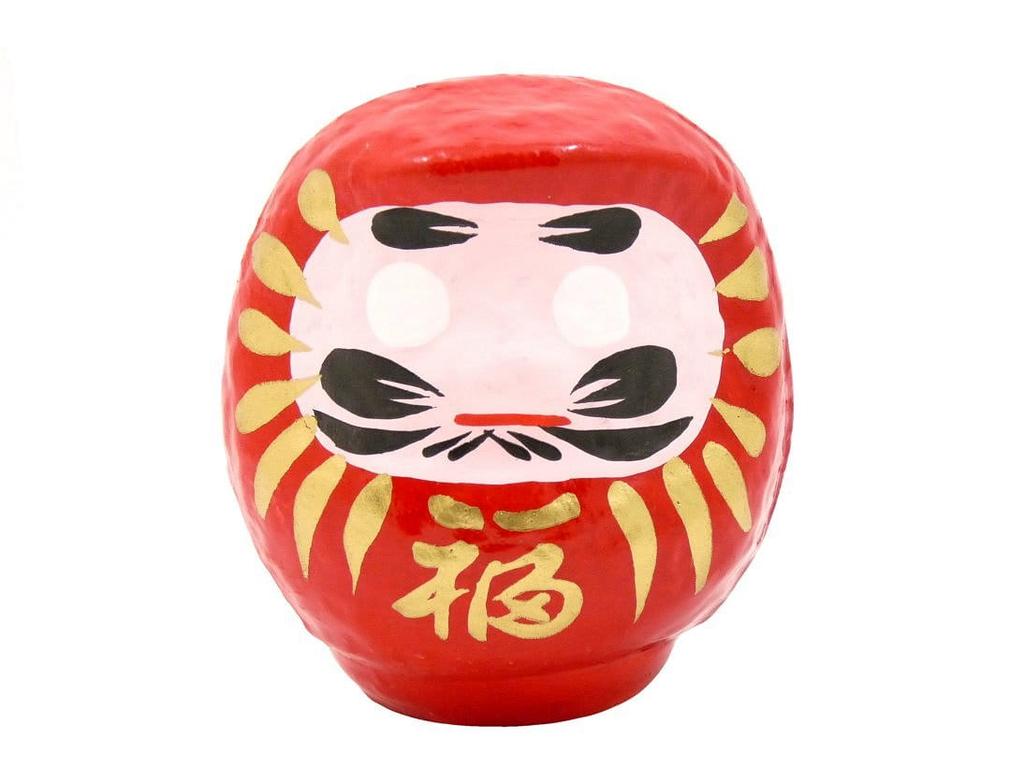
Daruma is a traditional Japanese doll made in the likeness of the monk Bodhidharma, the founder of Zen Buddhism. Its fierce facial expression expresses determination and the will to overcome difficulties, and the red color symbolizes courage and success.
Having a Daruma is also a fantastic way to give yourself or the recipient extra motivation.
The Japanese believe that by setting a goal, they can use the Daruma to help them achieve it. Why?
This kanji is fuku-iri (bringing good luck). Additionally, the doll's face itself is actually drawn with features that bring to mind the shape of mystical Japanese animals: a crane (eyebrows) and a turtle (mustache and beard).
crane is associated with the belief that these birds bring good luck and longevity, because they supposedly live a thousand years. The same goes for turtles, which can actually live for hundreds of years.
They are also said to provide protection.
Daruma are good luck charms, but there's more to them than just a wish. In reality, daruma isn't really about granting wishes; it's not in the spirit of Buddhism or any Japanese philosophy. The true meaning of daruma is a reminder of perseverance, concentration, and discipline.
The Chan/Zen school of Buddhism, founded by Bodhidharma, values self-discipline, and the practice of buying and using daruma is not so much about making wishes as about having a talisman that serves as a reminder of one's life goals.
Drawing a Daruma eye is not a wish; it is a promise to yourself that you will follow your dreams and achieve your goal, regardless of the obstacles you may encounter along the way and any traps you may have to escape from as you continue your journey through life.
A popular idiom that is often associated with the meaning of Daruma is 七転八起 nanakorobi yaoki, which roughly translates to "fall seven times, get up eight." Daruma are a symbol of perseverance and staying on track.
You have a goal but you're tempted to hesitate or give up - having that daruma on the shelf is a constant reminder of what you originally wanted; why did you make such a promise to yourself?
頑張って (ganbatte - good luck!)
These days, you might assume that daruma are simply mass-produced in a factory in China, much like the popular maneki-neko (nodding cat). But in reality, almost all daruma are produced in the Japanese city of Takasai in Gunma Prefecture, as they have been for over three centuries.
Originally, daruma were made by local farmers in the Takasai area to be blessed by passing monks. This was as early as the 17th century, when people were eagerly seeking good fortune to ensure a bountiful harvest each year.
This began the tradition of daruma-making in Takasai, Gunma, which remains alive to this day.
In terms of how they are made, daruma are traditionally hollow and made of paper mache using Japanese washi paper. Today, daruma makers don't make their own wooden molds but use pre-made ones, which are then filled with paper mache.While the modern daruma-making process has largely been handed over to machines, it is still a careful and technical process, one that has been improved by modern technology.
Today, a previously prepared wooden mold is dipped in liquid paper mache, and the air inside is extracted using a pump. This method ensures that each daruma is perfectly identical. In the past, this part of production was done by hand, by applying wet paper mache to the dampened surface of a wooden mold.
The mold itself doesn't always have to be wooden. Some manufacturers mold it from clay or even use metal, which guarantees a longer lifespan.
Made in Japan


 Товар из Польши


 Возврат по недоставке