AOKING 50L fuchsia hiking backpack
AOKING 50L fuchsia hiking backpack
• with a removable frame
• many pockets
• waterproof zippers
• adjustable shoulder straps in several planes
• with a chest and hip belt
• ventilated shoulder straps and back
• holders for additional luggage
• laptop/notebook/document compartment
• dimensions: 57x34x26 cm
• weight: 1.15 kg
• Dominant color: pink and purple
• Manufacturer's code: Adventure 50l
• Brand: Aoking
• Model: YJN67363
• Condition: New
• Additional features: water bottle compartment, trekking pole attachment, hip belt, chest strap, rain cover, adjustable carrying system, frame, back ventilation system, harness ventilation system, waterproof, with a flap, with laptop compartment
• Capacity: 41-60 l
• Gender: boy, girl, woman, man
• Dominant material: polyester
• Manufacturer's color name: pink
• Height: 57 cm
• Width (long side): 34 cm
• Depth (short side): 26 cm
• Number of compartments: 2
• Number of pockets: 7
• Weight: 1.15 kg
• Product weight with individual packaging: 1.3 kg
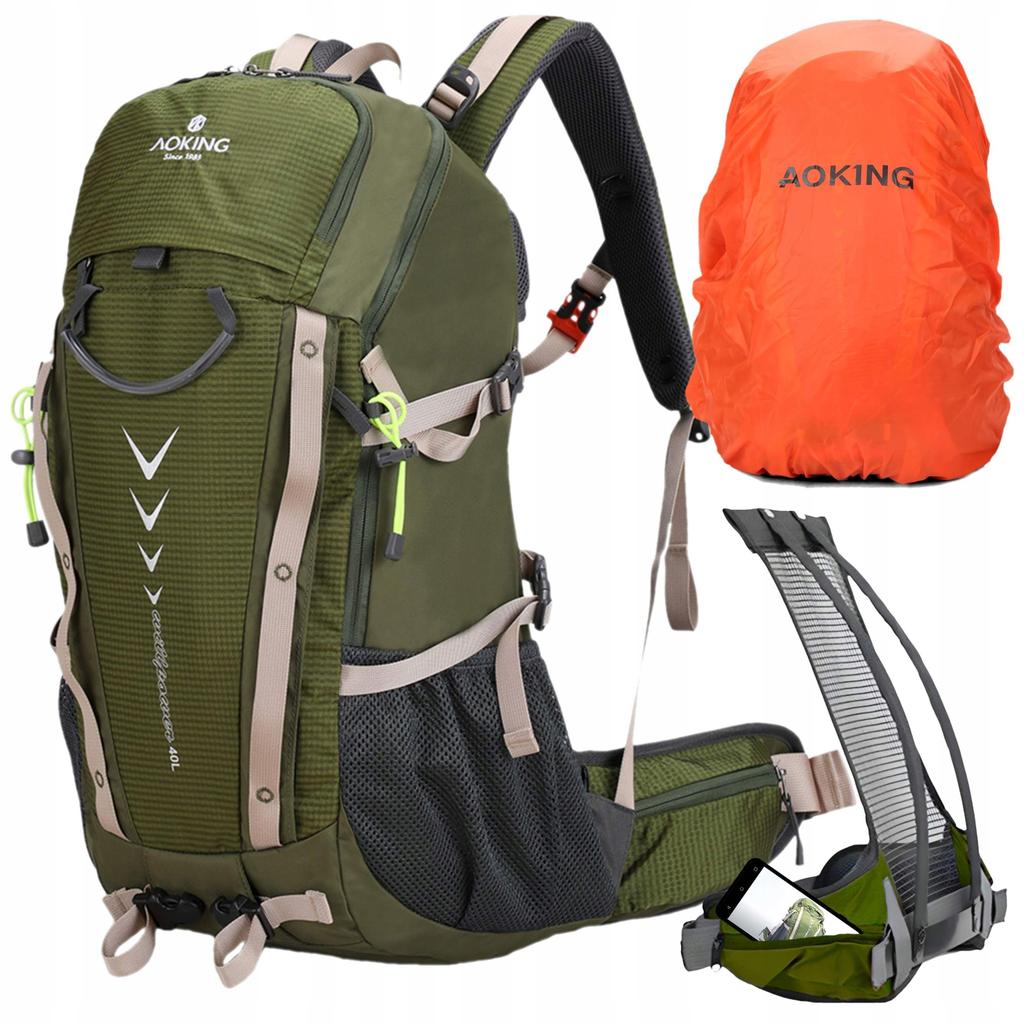
• The backpack consists of two elements - backpack with shoulder straps, and a separate mesh frame with a hip belt - which can be detached depending on your needs.
• The backpack itself has a rounded shape, allowing for proper weight distribution and the proper arrangement of the backpack's contents, so that the center of gravity is as close to your back as possible, thanks to the additional tightening straps.
• If necessary, the lower space can be reduced by tightening the front straps.
• A hip belt, padded with layered foam, is attached to the mesh frame. Additionally, there are small pockets on the outside where you can store small items such as cards, small wallets, or other small items.
• The lower pocket, seemingly invisible, located in the "floor" - see the graphic with the frame removed - of the backpack contains a rain cover attached to the backpack.
When setting off, it is worth adjusting the harness to your needs, so it's worth doing it both with an empty and a full backpack.
• The top drawstrings are primarily used to pull the backpack up and adjust the strap length to your body type. Taller people will loosen them, shorter people will tighten them more.
• Although this may not be 100% accurate, it's best to tighten the top straps so that the eyelets above the chest strap are at shoulder level.
• The eyelets themselves can be used as additional attachment points for other external luggage.
• The vertically adjustable chest strap allows you to adjust the strap position so that it doesn't sit too high on your neck or fall on your stomach. This strap is equipped with an elastic band that facilitates free movement when skiing or generally performing other body movements without digging into your body.
Additionally, the buckle of the hip belt is also an SOS whistle.
• At the end of the straps there are traditional tighteners, thanks to which we can bring the lower part of the backpack closer to the loins.
• The hip belt is finished with another tightener with an easy-to-release buckle.
The backpack's dimensions address probably the most common needs of people going on a trip. Multi-day trips to the bosom of nature.
Pin clips allow you to attach additional equipment such as poles, an ice axe, or a kalimata.
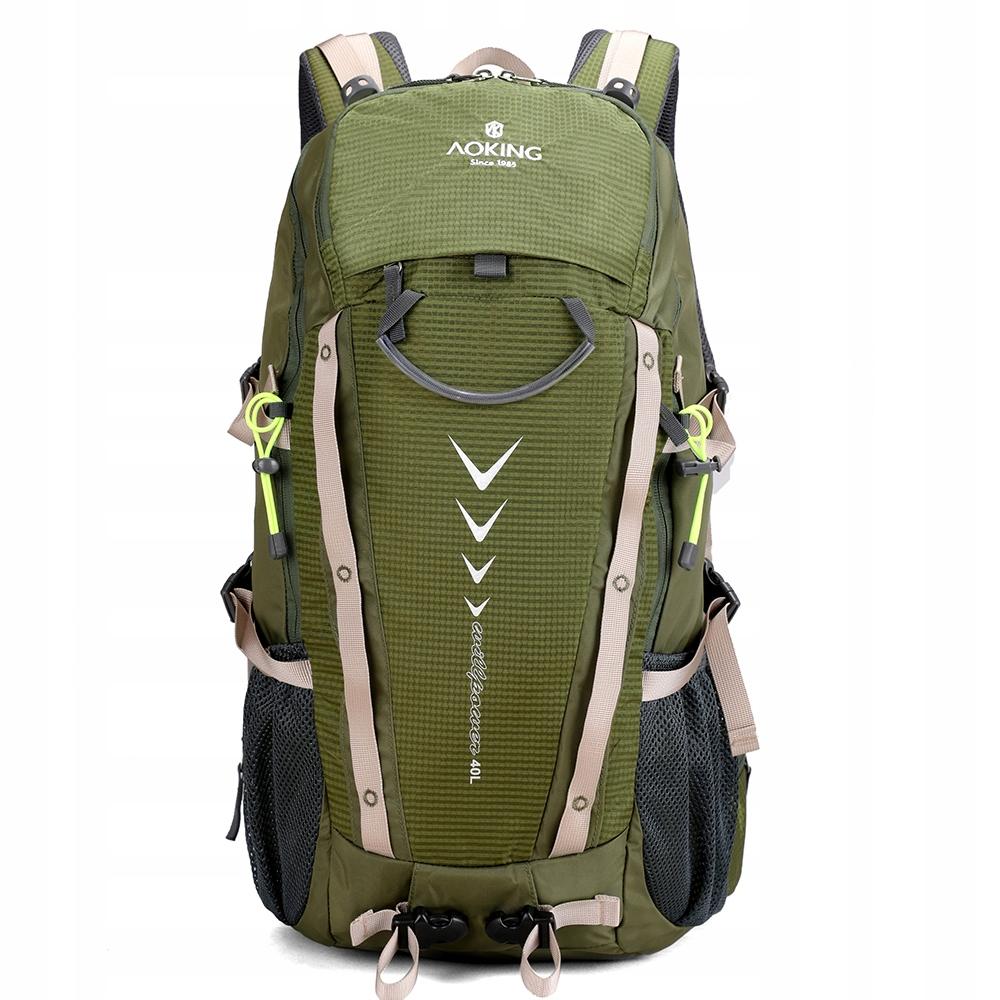
External, black mesh pockets located on both sides of the backpack provide additional space for other items that do not necessarily require packing in the main compartment.
Importantly, the gray elements located on the front of the backpack serve a reflective function.
The backpack has different cargo areas. Each has a different purpose.
1. The main cargo area is primarily intended for clothes, meaning lighter but still compressible cargo. Depending on your needs, it can be expanded by unzipping the internal zipper that separates the compartment marked 2.
2. Spare shoe compartmentand more. Thanks to the aforementioned possibility of separating the cargo area, you can store things like spare shoes, dirty or damp clothes. For easier access to this compartment from the front, unzipping the zipper allows you to access this part of the backpack without having to unload the contents in compartment 1.
3. Floor compartment/pocketswith access from the left and right sides after unzipping the zippers. This space can be used for other additional items, such as cosmetics, maps/guidebooks, and other handy equipment.
4. This pocket holds a rain cover. The pocket can also be used for other small items. Remember, however, that the bottom of the backpack will likely be a natural base when taking it off, so it's best if the items you put in don't overly bulge the pockets, creating a semicircular shape that could cause the backpack to tip over.
5. An ideal place for small items like a card, passport, phone, cash, or entrance tickets—anything you want to have close at hand without having to take the backpack off your shoulders.
What's more important? Backpack weight or comfort?
Unfortunately, sometimes you can't have everything at once.
• If you're planning a trip to the mountains and will be traveling longer distances while carrying a full backpack, it's recommended to install a frame. It provides stability to the entire backpack and allows for maximum load capacity.
This comfort comes at the cost of a higher weight for the full set.
• However, if you just want to pop to the nearby store or are going on a leisurely two-hour trip with the family that's more like a walk in the park and want to take two apples, sandwiches, a bottle of water, and a raincoat, a frame may prove to be an unnecessary burden.
By unmounting it, you will have about 600g less on your back.
link to the video: https://youtu.be/McAkGRjnksk



 Товар из Польши


 Возврат по недоставке


![Рюкзак 30 л Туристический рюкзак для мужчин и подходит для чехла от дождя Системы гидратации Зеленый [Превосходный] Женщин, Легкий, Треккинг, Походы, Кемпинг,](https://img-edg.joomcdn.net/394cd370bc5897b21c15a519a292992c00cdff61_100_100.jpeg)


![50л Большая вместимость Туризм Открытый Легкий Катастрофа Путешествие Унисекс [Kayiyasu] Рюкзак, Рюкзак, Водонепроницаемый, Многофункциональный, Прочный, Рюкзак,](https://img-edg.joomcdn.net/6a5ebb15b3fd47e587887da08408afc71f6cbfa9_100_100.jpeg)


![[LTG] Водонепроницаемый рюкзак для мужчин и женщин, Аварийный рюкзак, Легкий, 32 л, для спорта, Повседневный рюкзак, Для активного отдыха, Кемпинга, Тренажерного зала, Пешего туризма,](https://img-edg.joomcdn.net/c6950a9d20042ee5d4e3864cfd1b80a752d8c7d1_100_100.jpeg)
![[HiGe] Мотоциклетный рюкзак, Туристический рюкзак, Легкий, Большая вместимость, Водоотталкивающий, Рюкзак, Сумка для активного отдыха, Дорожный рюкзак, Туристический рюкзак](https://img-edg.joomcdn.net/a3bc05f61f1d83cf7d0ad7864112dd4073fc7cf0_100_100.jpeg)
![[FSD.WG] Легкий туристический рюкзак 55 л для дневных походов, для мужчин и женщин, большой вместимости, водонепроницаемый, дышащий, удобный рюкзак для кемпинга,](https://img-edg.joomcdn.net/bf3704f3555b9338daf48e200749b3972d758d27_88_100.jpeg)