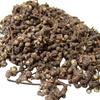
You haven't used expanded clay before? See what your plants have been losing!
Mixing expanded clay with soil in a 2:1 ratio (two parts of soil to one part of expanded clay) improves its properties, thanks to such a mixture the soil will become more permeable and the plant roots will have constant access to air.
• Loosens and aerates the soil
• Provides air access to the root system
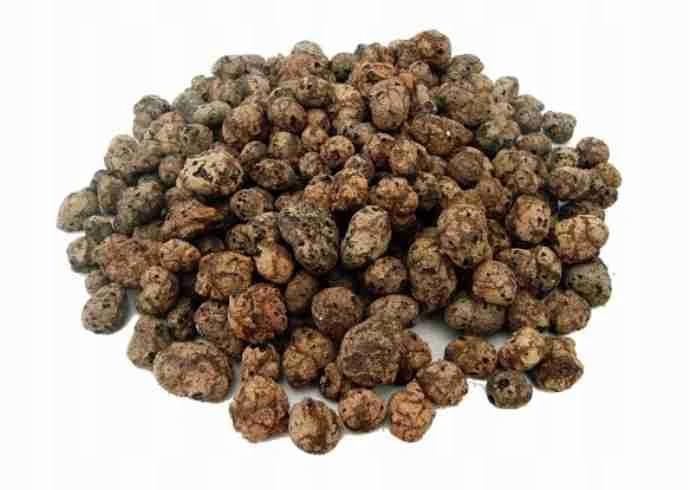
Gardening expanded clay granules 8-16mm 40l
• size: 8-16 mm
• ensures proper water drainage
• helps maintain appropriate soil moisture
• does not change the soil pH
• chemically neutral
• can be used repeatedly
• supports soil aeration
• sold loose, without bulk packaging, 1 pc. = 40 liters
Expanded clay is a universal material with a wide range of applications in gardening and growing potted plants.
• for drainage,
• for loosening
• in hygroscopic crops.
1. It is also harmless to plants and the environment.
2. Expanded clay is a lightweight ceramic aggregate obtained by burning easily swelling clays and loams in rotary kilns at a temperature of 1200°C.
3. It has high thermal insulation, resistance to chemical and atmospheric factors, fungi, insects and rodents.
4. It is an odorless, non-flammable, frost-resistant material with low water absorption.
5. The product is completely chemically neutral - it does not change the soil pH, is not soluble or washed away by water.
6. Expanded clay is completely resistant to all pest, mold and fungal activity, which reduces the risk of plant infection.
Expanded clay is a durable, light, porous and chemically neutral material that can be used Used as a structural component of the substrate. Expanded clay's reliability stems from its easy assimilation by plants and their microorganisms.
The specific properties of this material enable its use in hydroponic plant cultivation and in crops with drip irrigation combined with fertilization. Expanded clay retains its shape, form, and consistency, and does not rot or spoil, allowing for sterilization and repeated use.
The granules are used for drainage in pots and containers (including flower beds) with plants and for structural naturalization of the substrate (e.g., sprinkling the surface of the soil where succulents are grown).
Expanded clay can be used in the cultivation of trees and ornamental shrubs, and wherever mulching is used to suppress weed growth.

 Товар из Польши


 Возврат по недоставке