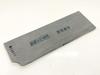
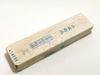
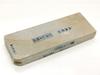
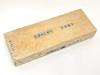
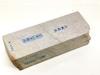
Originating with the invention of the Japanese sword, this is a natural sharpening stone produced in Yamashiro-no-kuni, within the present-day city of Kyoto.
It boasts a history of nearly 900 years dating back to the late Heian period and is known as the most refined and prestigious sharpening stone within the slate system. It was the most important military supply during the age of the sword, and was placed under the control of the ruling shogunate from the Kamakura period to the late Edo period. In terms of values up to the modern era, it possessed characteristics akin to factory materials, and was as essential as uranium ore for nuclear weapons today, necessitating strict management.
The sharpening stones from Iyo-no-kuni are said to have circulated within the Seto Inland Sea as early as the Kofun period, and are renowned as the oldest and largest producers of sharpening stones within the igneous rock system, with a history exceeding 1,500 years.
Our nation’s sharpening stone resources held a power capable of changing both people and the country. Due to a lack of iron ore and the inferior yield of unique tatara steelmaking, coupled with being a remote island at the end of iron transmission routes, the arrival of iron was a fatal condition for creating an iron civilization.
It is historically and traditionally proven that our nation’s sharpening stone resources are consumables that allow for the free processing of harder and more resilient iron products. Despite having unfavorable locations for construction, we came to possess the world’s oldest and largest wooden structures. Despite being a latecomer, we achieved the invention of world-leading iron products in the medieval period, sustaining a nearly 700-year era of the sword.
Given that most of recorded history belongs to the Iron Age, iron tools were our limbs and the very medium for manufacturing. The fact that Japan was able to produce the world’s strongest iron products and tools as early as the Asuka and Horyu-ji Temple periods, around 1,300 years ago, is proof that it was only natural for Japan to become known today as a manufacturing nation.
The fact that we overcame even adversity that would have cost us our limbs in creating iron is undeniable. The backing of unique and invaluable sharpening stone resources eliminated the rate-limiting factor of sharpening during steel development with exceptional sharpening stone performance. If we were to assess our nation’s various resources based on values up to the modern era, we would be a resource-rich nation, even if 70% of the land is covered in forests.
However, it is because of the Japanese archipelago, where five plates collide, that we were allowed to extract sharpening stones of varying quality and quantity in different locations in exchange for enduring numerous natural disasters. Our acceptance of being governed by a harsh yet bountiful and majestic natural environment has led us to learn patience, cooperation, and compromise, and to cultivate gratitude, reverence for nature, and a foresight for the existence of the eight million gods (various resources and blessings), which has evolved into the foundation of Shinto spirituality.
This has allowed us to pass on the most admirable strengths and charms of Japan, which are relatively tolerant of foreign cultures and religions, and repeatedly absorb and merge with them, without limiting ourselves to material happiness.
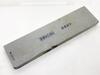
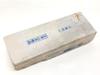
・37 x 228 x 42 mm, 905g, very hard
・A remarkably beautiful color, hard and fine, surprisingly easy to use
・Siliceous slate from Umegahata, Ukyo Ward, Kyoto City, Yamashiro-no-kuni. #6,000~24,000 grit level. While requiring a degree of polishing, it has a higher probability of becoming fine. Due to the continuous circular scratches, it is difficult to achieve a long-lasting edge and a mirror finish comparable to artificial sharpening stones, making it easier to bring out the forging lines and contrasts arising from material and carbon content differences.
・The harder and finer the stone, the more it resembles black rock juice. Because hardness reduces self-sharpening, proceed with sharpening while performing kumadori (applying sharpening stone slurry) as needed, depending on the purpose and polishing skill.
【Voltage Compatibility】
When using electrical appliances, please note that they are designed for Japanese voltage specifications (90-110V), so if you use them with a different voltage, it may cause a malfunction.
【Plug Type】
Our products use Japanese plug types (A or B type).
Please use a conversion adapter if necessary.
【Important Note on Transformers and Adapters】
A transformer adjusts voltage to match your device's requirements.
A conversion adapter only changes the plug shape and does not adjust voltage.
Using only a conversion adapter without a transformer may result in damage to the product.
【Liability】
We are not responsible for malfunctions or damages caused by improper use, such as operating the product without a transformer.
![[Shizen Toishi] Natural Whetstone Masamoto-yama Yamashiro-me Ukyo-ku Umegahata Nakajima Higashiozaki Mizu-asagi Rokubo Musesho #70 / 905g](https://img-edg.joomcdn.net/b0acbe8c3049277ef68b2777df14324606fb2562_original.jpeg)
![[Shizen Toishi] Natural Whetstone Masamoto-yama Yamashiro-me Ukyo-ku Umegahata Nakajima Higashiozaki Mizu-asagi Rokubo Musesho #70 / 905g](https://img-edg.joomcdn.net/b57cbeffa24c1deb1e1f3baad400c7b2e978dd92_original.jpeg)
![[Shizen Toishi] Natural Whetstone Masamoto-yama Yamashiro-me Ukyo-ku Umegahata Nakajima Higashiozaki Mizu-asagi Rokubo Musesho #70 / 905g](https://img-edg.joomcdn.net/715619e31f2107fe12b55cbcb671347c03c9c963_original.jpeg)
![[Shizen Toishi] Natural Whetstone Masamoto-yama Yamashiro-me Ukyo-ku Umegahata Nakajima Higashiozaki Mizu-asagi Rokubo Musesho #70 / 905g](https://img-edg.joomcdn.net/638caabfc0f1e884c0b7f2e59e6eb358f4501733_original.jpeg)


 Товар из Японии


 Возврат по недоставке