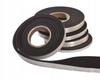
HANNOBAND expanding tape
• Width: 20mm
• Thickness (after expansion): 39mm
• Length: 5m
• Color: Gray
The sale includes 1 pc. Hannoband HBD expanding tape
20/5-7/28 length. 5m.
The tape expansion time depends on the temperature.
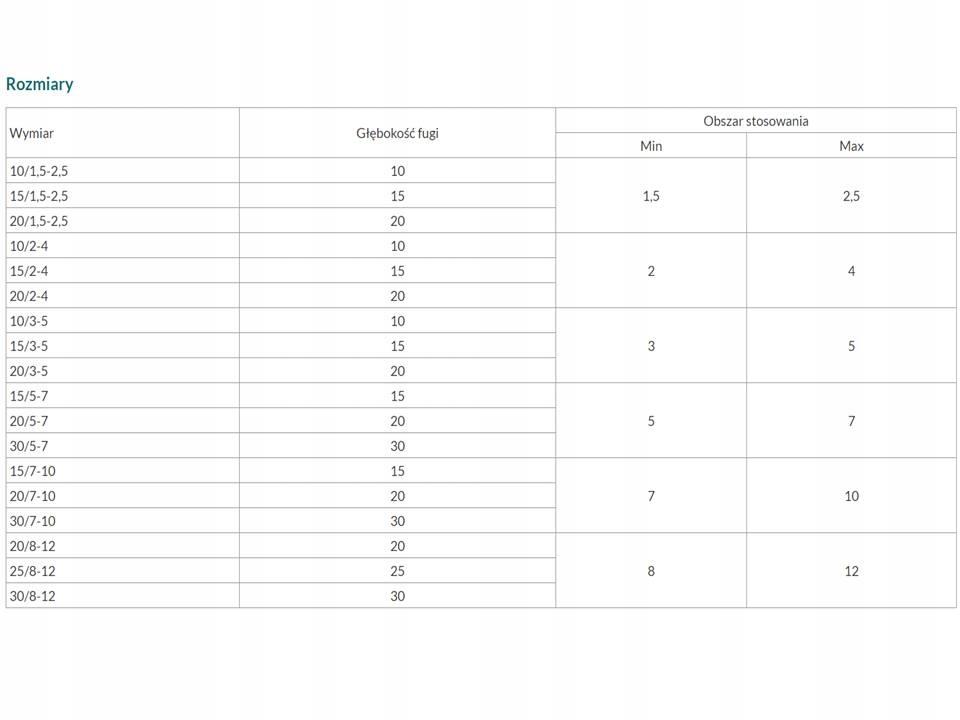
The first dimension, e.g., 15 mm, determines the tape width. The second dimension, e.g., 2-4 or 5-7, determines the recommended width of the joint between the window frame and the wall, while ensuring resistance to water penetration under a specific pressure.
The third dimension is the total dimension after expansion.
Proven quality, don't risk your money.
After expansion, the tapes reach a thickness significantly greater than that recommended by the manufacturer for a given joint/gap. E.g. total dimensions after expansion:
2-4 - approx. 15mm.
3-5 - approx. 20mm.
5-7 - approx. 28mm.
7-10 - approx. 39mm.
8-12 - approx. 45mm.
Joint sealing tape made of soft polyurethane foam impregnated with acrylic and containing additives and fillers.
• Tightness to driving rain (DIN EN 1027) ≥ 300 Pa (meets the requirements of material group BG 2 for tightness against driving rain according to DIN 18542:2009)
• Values ≤ 600 Pa are achievable, depending on the degree of tape compression and joint width.
Areas of application
• Window installation
• Rain-tight connections
• Thermal sealing between window frames and walls, connections of system profile elements, connection of cover profiles, battens.
• Support for concrete elements
• Formwork connections during concreting
• Lightweight partition walls
• Separation of double Floors
• Slope Windows
• Roofing Seals
• Ridges, Gullies, Dormers
Usage / Installation Instructions
Before using and installing impregnated expansion tapes, the following instructions must be observed:
■ Select the mounting tape appropriate to the application and the respective installation situation (see also DIN 4108, Part 7).
■ Correct selection of the material class according to DIN 18542 (BG1, BG2, BG R).
■ Compatibility of the tape with the adjacent building materials must be ensured.
■ Select the correct expansion range of the tape corresponding to the actual (max.) joint width. The manufacturer's recommendations regarding the scope of application should be taken into account, taking into account dimensional changes depending on temperature or possible movement of the building structure.
■ The rate of tape expansion depends on the ambient temperature and the material (cooling or heating the tape before application, if necessary), as well as the tape's production date.
■ For aesthetic reasons and to avoid gaps, install the tape with a reserve of 1 to 2 mm.
■ Always cut the first and last 2 cm of tape from the roll.
Preparation of joints/substrate: The substrates/surfaces to which the tape is adhered must be smooth. Dirt, e.g., mortar residue, should be removed. Opposite joints should be as parallel as possible (if necessary, smooth or re-profile the reveal, e.g., in older buildings).
The recommended joint widths must not be exceeded, this also applies to uneven surfaces.
TYPES OF HANNOBAND HBD EXPANDING TAPES
Application: Peel off approximately 20-30 cm of the protective paper and insert the tape into the joint parallel to the edge, leaving an offset of approximately 1-2 mm. Press the adhesive layer of the tape onto the appropriate side of the joint (e.g., using a spatula). Unwind the tape piece by piece and gently press it onto the surface to be bonded (optionally, secure the rest of the roll with adhesive tape or a clip). Never bend the tape! When using uncompressed tape strips, cut the tape with an allowance of approximately 2-3 cm to the length of the joint and apply to a suitable surface. For a more secure connection, you can press the assembled elements with the tape between them against the structure (e.g., with a clamp). The pressure applied will determine the level of tape compression and thus the tightness of the joint.
Cross and transverse joints: For cross and transverse joints, lay the tape first in the vertical joint, and in the remaining joints, lay the tapes from the outside towards the first joint. Gently press the ends of the tapes where the tape edges meet.
Laying short sections: Lay shorter sections of tape by pressing them together with their edges. Do not twist or overlap the tapes!
Different joint widths: For significantly varying joint widths, use tapes with different expansion ranges in a single joint. Tape ends should be touching edge to edge, never overlapping.
Wet or dusty joints: If the adhesive does not hold sufficiently in wet, dusty, or frosty joints, the tape can be pressed down in several places using wedges and removed after the tape has fully expanded.
Storage: The shelf life is 18 months from the date of production. In a dry and cool place in the original packaging at a temperature of +5 – +25°C. Store cartons only in an upright position (rolls lying down). Transport individual rolls only lying down, one on top of the other. Avoid point pressure on the tape discs. Avoid shifting the tape layers on the roll. Mechanical loads (especially perpendicular loads on a lying roll and pressure on the edges of the roll) can lead to the slipping of individual layers of compressed tape and so-called telescoping the roller.


 Товар из Польши


 Возврат по недоставке