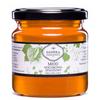
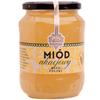
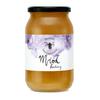
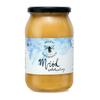
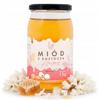
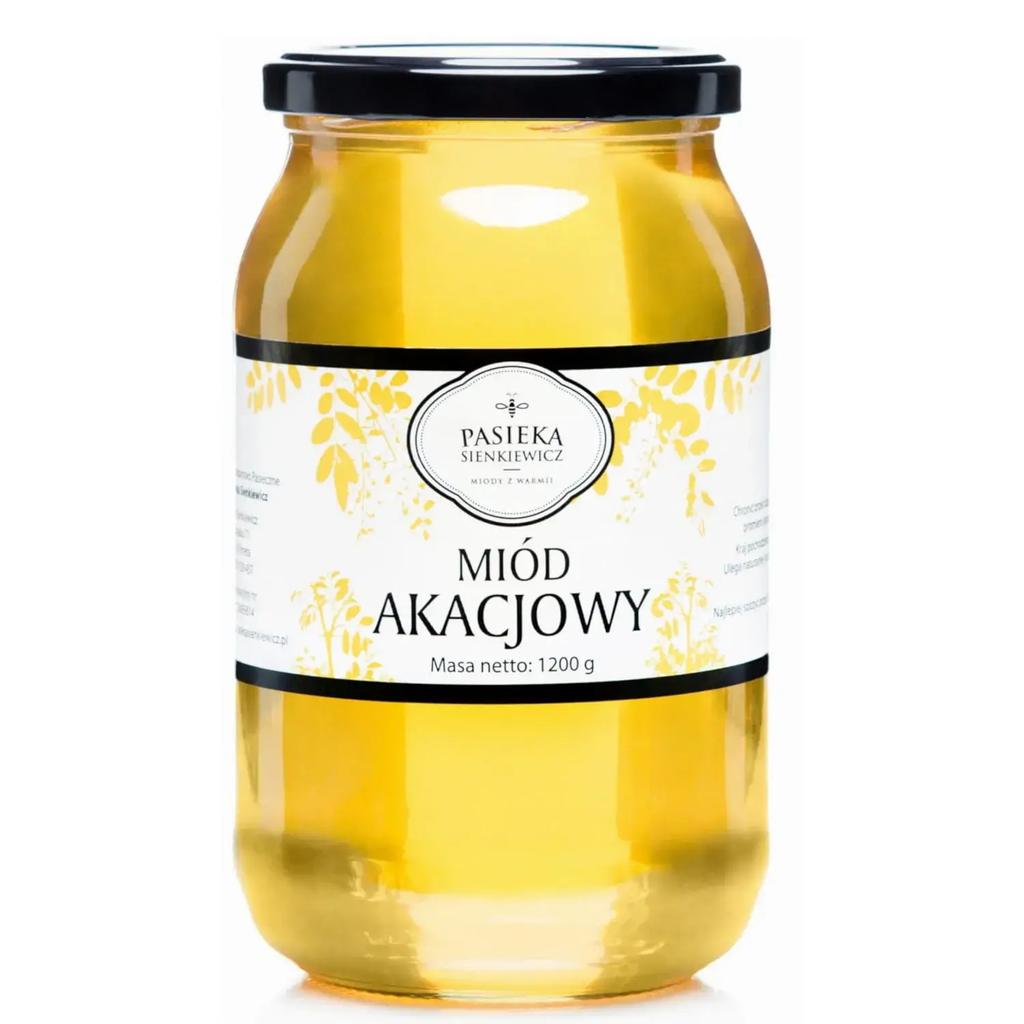
Acacia Honey 900ml 1200g
HIGH-QUALITY NATURAL ACACIA HONEY FROM A FAMILY BEEF FARM!
Acacia honey crystallizes very slowly, so it remains in liquid form for a long time. It has a light, sweet taste, with a strong aroma of acacia flowers. Because it is very sweet, it can be safely given to children, who may not always like other honeys.
Acacia honey is used in states of physical and mental exhaustion to strengthen the body, relieve nervous tension, combat insomnia, improve memory and eyesight, and helps with nervous system weakness. Acacia honey is recommended in cases of nervous breakdowns, depression, and neuroses of various nature.
Acacia honey should be given to convalescents and hard-training athletes.
• antibacterial effect
• accelerates the regeneration of the gastric mucosa, thus supporting the body in case of digestive problems
• recommended for people suffering from gastric and duodenal ulcers and diabetics
• lowers high blood pressure, dilates blood vessels, increases hemoglobin levels
• It often appears as an ingredient in nourishing masks for both facial and scalp skin.
How to use honey?
The basic daily dose of honey for each person is 20g.
• We consume honey with bread, add it to cooled tea, milk, fruit and vegetable juices, and to various dishes and cakes. However, it has been shown that the best results are obtained by consuming honey in the form of an aqueous solution (1 teaspoon per glass of lukewarm water), prepared 10-12 hours before consumption.
Store in a cool, dark, and dry place, out of the reach of small children.
Depending on the date the honey was jarred, the honey will be liquid or crystallized. Honey crystallization is not a product defect - it is a natural process that depends on when the honey was bottled.
We invite you to buy high-quality natural products from a family-run apiary. The hives are located in one of the cleanest areas of Poland - Warmia. The area is characterized by a lack of industry, monocultures, and expressways.
Bees have been present in our family for a long time, as evidenced by the third generation of beekeepers.
The apiaries are under constant supervision of the District Veterinary Officer.

 Товар из Польши


 Возврат по недоставке