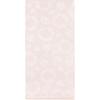
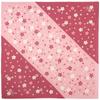
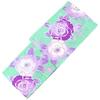
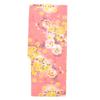
A gorgeous rose pattern: This reversible yukata obi (sash) is made of Kiryu weave and features a striking and beautiful rose pattern.
Reversible design: The reversible design allows you to enjoy different designs on the front and back, expanding your styling options.
Perfect for summer events: Suitable for summer festivals, fireworks displays, and outings in a yukata.
High-quality Japanese craftsmanship: With meticulous stitching and beautiful colors unique to Japanese manufacturing, this product can be enjoyed for a long time.
Perfect for gifts: Recommended as a present for Mother's Day, birthdays, or for anyone who loves traditional Japanese clothing.
Material: Made from a blend of 90% cotton and 10% polyester, it is easy to handle and care for.
Dimensions: Approximately 360cm long x 18cm wide, a size that can accommodate various knotting techniques.
Kiryu Weaving Tradition: This is a traditional Japanese yukata obi woven in Kiryu, Gunma Prefecture, a renowned textile production area.
"Kiryu-ori Reversible Yukata Obi (Sash) - Cotton Touch - Rose Pattern - Made in Japan"
~A gorgeous and easy-to-tie obi~
This yukata obi (sash) was woven in Kiryu, Gunma Prefecture, a renowned center for textile production.
Ready-to-wear, ready-made garment. Made from a cotton and polyester blend, it's easy to handle and care for.
We offer seven color options: red, celadon, yellow, black, white, pink, pink, and purple.
The cotton-touch obi features a rose pattern on the front and flower petals on the back.
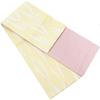
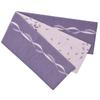
This reversible obi can be on both sides, expanding your coordination options with your yukata.
The look changes depending on how you tie it, making it a great choice for casual outfits.
Since ancient times, there has been a custom of giving long items, such as sashes, as gifts to ward off evil.
Obi (kimono sashes) are perfect not only for personal use but also as gifts for loved ones.
Kiryu is a center of Japanese textile production.
Kiryu, located in southeastern Gunma Prefecture, has been renowned as a textile production center since the Nara period, 1,300 years ago.
It is a major textile production area, particularly known as "Nishijin in the west and Kiryu in the east," producing a large amount of obi fabric and patterned silk crepe.
Historical buildings, such as textile factories with sawtooth roofs, still remain today.
![Reversible Yukata Cotton Rose Made in Japan [Warakugure] Kiryu-ori Obi, Touch, Pattern, (Pink)](https://img-edg.joomcdn.net/2bdc220a8e2fcc0e74bb9ebc8741794cb31f160f_1024_837.jpeg)

 Товар из Японии


 Возврат по недоставке


![Кирю тканый двусторонний юката оби стрелы перья сделано в Японии [Warakugure] (Роза)](https://img-edg.joomcdn.net/cd258579ec4b54d82b237973eee4b64c0159a7b6_100_100.jpeg)


![[Warakugure] Реверсивный пояс-оби для юкаты Kiryu-ori, «Стихи нитей», Узор в волнистую полоску, Сделано в Японии (розовый)](https://img-edg.joomcdn.net/04ff50a11e63e77f101f45610eaafd2d626e34a5_100_79.jpeg)