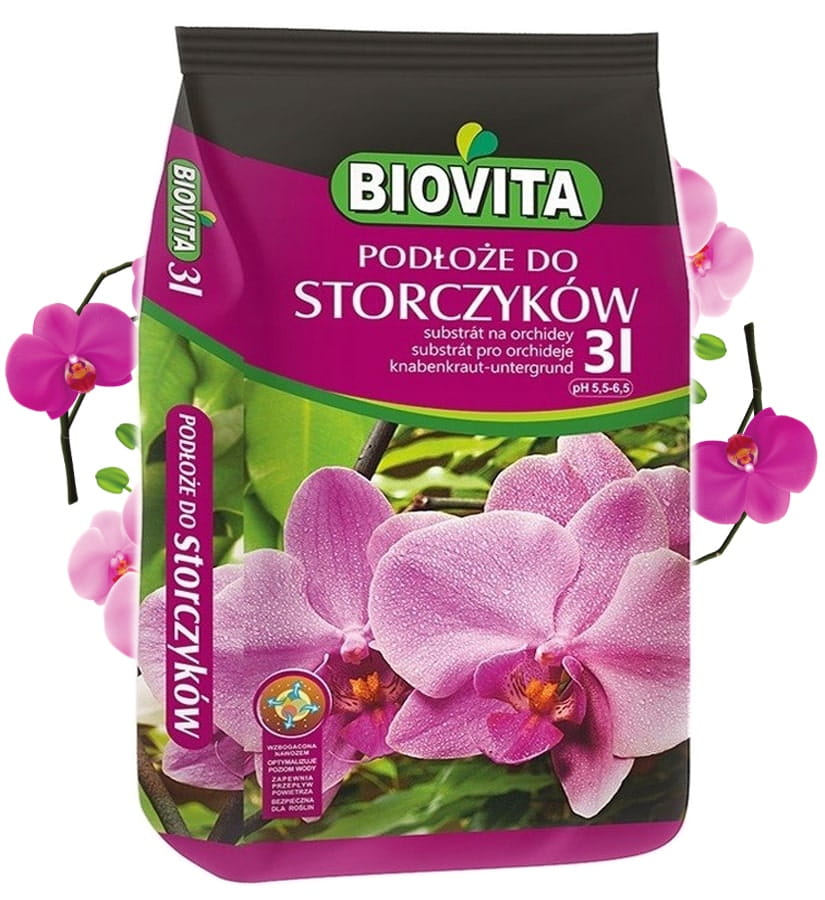
Orchid substrate with nutrients 3l
Biovita orchid substrate 3l is a professionally composed substrate with the highest quality ingredients. It has a light and airy structure, enabling optimal plant growth. The use of bark, coconut chips, and perlite ensures proper air circulation and maintains the proper substrate moisture.
High-moor peat enriched with a starting dose of fertilizer provides the appropriate nutrients, so orchids do not require fertilization for a period of 3-4 weeks after repotting.
Parameters:
- Capacity 3l
- pH 5.5-6.5
- Enriched with fertilizer
- Ensures air flow
- Optimizes water level
- Safe for plants
Ideal for species:
- Phalenopsis
- Dendrobium
- Cymbidium
- Cattleya
- Paphiopedium
How to repot orchids?
1. Before planting, soak the plant in water, which will make the roots more flexible
2. Carefully cut open the old pot with scissors
3. Remove the old substrate and wash the loosened roots in water
4. Cut off dead and damaged roots
5. Into a new pot, Pour drainage at the bottom, e.g. expanded clay (available in our offer)
6. Place the orchid in a new pot, don't forget the support
7. Cover the plant's roots with Biovita substrate, remembering to leave the aerial roots exposed.
Product advantages:
1. Good drainage: Orchids don't like standing water in the substrate. The soil should be well-drained to avoid excess moisture, which can lead to root rot.
2. Light and loose structure: Orchids have aerial roots that require access to oxygen. This substrate is light and loose, allowing the roots to breathe freely.
3. Rich in nutrients: Orchid soil provides essential nutrients. It is worth using special substrates designed for growing orchids, which are adapted to their nutritional needs.
4. Low salt level: Orchids are sensitive to excess salt in the substrate. The soil is low in salt, which can be achieved by using appropriate substrates and avoiding over-fertilization.
5. Quick-drying: The soil's ability to dry quickly is important because it helps avoid excess moisture, which can lead to orchid root diseases.
6. No chemical additives
7. Appropriate pH: Orchids prefer a slightly acidic to slightly alkaline pH. The optimal pH for most orchids is in the range of 5.5-6.5.


 Товар из Польши


 Возврат по недоставке