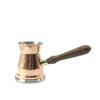
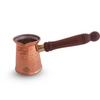
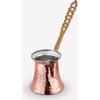
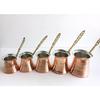
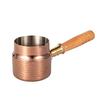
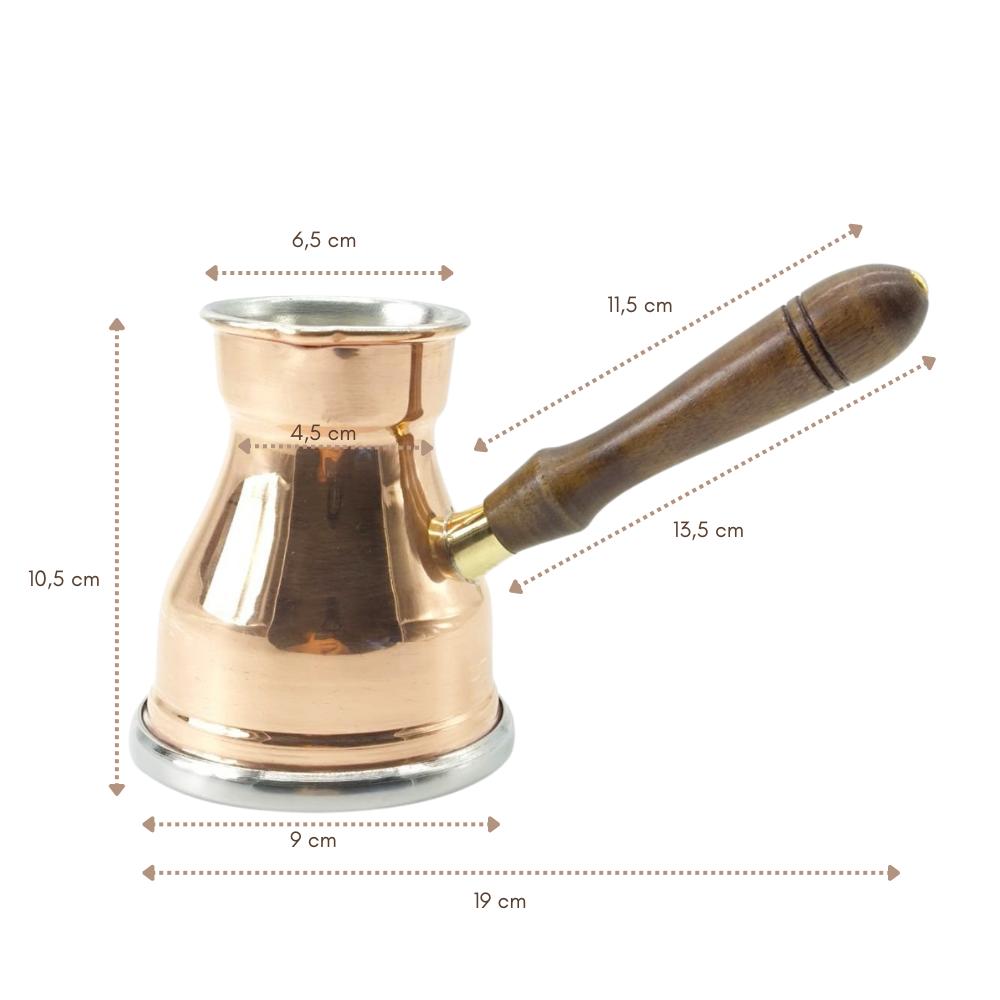
The Jazzve copper coffee pot, with a usable capacity of 340 ml, is a handmade vessel designed for brewing Greek, Turkish, and Arabic coffee. The elegant, glossy copper surface combined with a natural wooden handle gives the pot a unique character. It has an additional steel base that increases the vessel's stability and protects against overheating, giving the coffee a more refined flavor. Product Specifications: Capacity to the line: 340 ml Total capacity: 400 ml Weight: 300 g Material: High-quality copper with a tinned interior coating Base: Steel Handle: Wooden, made of rosewood Finish: Smooth, glossy Due to the handcrafted process, deviations of +/- 5% from the specified parameters are permissible. Additional information: The product has been tested for metal migration in accordance with applicable standards for materials in contact with food. Tests confirm that the tinned interior is completely safe. The pot has a steel base made of ferromagnetic materials. The product has been tested for metal migration in accordance with applicable standards for materials in contact with food. Tests confirm that the tin-plated interior is completely safe. How to use a copper coffee pot: Add ingredients: Pour freshly ground coffee, sugar, and water into the pot. Heat: Place the pot over low heat and heat until the coffee begins to rise and form a froth. Do not bring to a boil. Serve: Gently pour the coffee into a cup, taking care to retain the froth. The pot can be used on both gas and electric stovetops. However, for electric and induction stovetops, an electric stove adapter should be used. Why choose a Cu29 pot? Even heating: Copper conducts heat perfectly, providing ideal conditions for brewing coffee. Tradition and Style: The smooth, high-gloss surface and solid construction make this pot not only a functional but also a decorative kitchen accessory. Hygiene and Durability: The tin-plated interior ensures easy cleaning and longevity. How to Care for and Wash Jazzve: Proper care and cleaning of your copper coffee pot is crucial to maintaining its quality and longevity. Before first use and after each use: Wash the inside of the pot with warm water and a mild detergent. Avoid using harsh chemicals, hard sponges, or other utensils that may react with or damage the copper surface. Dry Thoroughly: After washing, wipe the pot dry with a soft cloth to prevent water spots and preserve the copper's luster. Material Specifics: Copper: This product is made of over 99% copper, which means its color will change over time; dark stains may appear, which is unavoidable. This color change does not affect the functionality or quality of the product. This gives the pot an antique look. However, if you want to restore the pot's exterior shine, we recommend cleaning it with a mixture of lemon juice and salt (100 ml of water - 2 teaspoons of salt - juice of ¼ lemon) or copper cleaning product. Tinned Interior: Copper pots are tinned inside for safety and functionality reasons. The tin coating acts as a protective barrier, protecting the kettle's interior from corrosion. It also prevents chemical reactions that could occur between the copper and substances such as acids. Additional Tips: Storage: Store the pot in a dry place to prevent oxidation of the copper. Avoid detergents: Using detergents can lead to chemical reactions with copper, so cleaning with natural products is recommended. Proper care of your copper coffee pot will ensure its durability and aesthetic appearance for many years. What to look for when preparing coffee in a pot: Preparing coffee in a pot is an art that requires attention and precision. Here are some key aspects to pay attention to: Use fresh, filtered water and high-quality, freshly ground coffee. The correct ratio of coffee, water, and sugar is crucial. Typically, one teaspoon of coffee and sugar per cup of water is used. Heat the coffee over low heat. Too high a temperature can destroy the delicate coffee flavors. Stir the coffee gently to dissolve the sugar, but do not do this too often to avoid disturbing the foam formation. Watch the coffee carefully and remove from the heat as soon as it begins to rise and form a froth. Do not bring to a boil. The foam (cream) is a key element of coffee brewed in a pot. Try to retain as much foam as possible when pouring the coffee into cups. Serve the coffee immediately after brewing to enjoy its full flavor and aroma. Never place the pot on the stove without water inside to avoid damaging the pot. Keep the heat low to prevent the wooden handle from catching fire. Preparation: Pour freshly ground coffee into the pot. We recommend 1-2 teaspoons per serving, or 2-4 teaspoons for a 600ml pot. Add sugar to taste and add water, leaving some space at the top. Pour the water into the narrowest diameter of the pot. Heating: Place the pot over low heat. Stir gently until the sugar dissolves. You can also use it without sugar, and there's no need to stir. Let the coffee slowly heat until it begins to foam. Avoid boiling, as this can destroy the delicate aromas of the coffee. Serving: When the foam begins to rise, remove the pot from the heat. Gently pour the coffee into a cup, trying to retain as much foam as possible. Let the grounds settle to the bottom and enjoy your aromatic coffee. By paying attention to these details, you will ensure excellent, aromatic coffee that fully captures the traditional character of the beverage prepared in a copper pot. Caution! Never place the pot on the fire without water inside to avoid damaging the vessel. The fire must be low to prevent the wooden handle from catching fire. Various names for the pot around the world. The pot is a symbol of a traditional coffee brewing method with roots in various cultures. Depending on the country, it is known by different names: Polish: Dżezwa, briki, tygielek Armenian: Սրճեփ (srdjep) Arabic: إبريق (ibrīq) or ركوة (rakwa) Turkish: Cezve Greek: Μπρίκι (briki) Russian: Турка (turka) Serbian and Croatian: Ђезва / Đezva Bulgarian: Джезве (djezve) French: Cezve ou cafetière turque English: Cezve, ibrik, Turkish coffee pot The history of this method of brewing coffee dates back to antiquity, when the method of brewing coffee in a crucible was invented. Since then, the coffee pot has become an integral part of coffee culture in many countries, preserving traditions and passing them down from generation to generation. This centuries-old brewing method is valued for its ability to extract the full flavor and aroma of the coffee beans, making it unique. Please be advised that there may be slight variations in dimensions and weight from the product description, +/- 5%. Minor scratches, discoloration, or spots may also occur due to the handcrafted production process. However, we assure you that these variations are minor and do not affect the quality or functionality of the product.



 Товар из Польши


 Возврат по недоставке