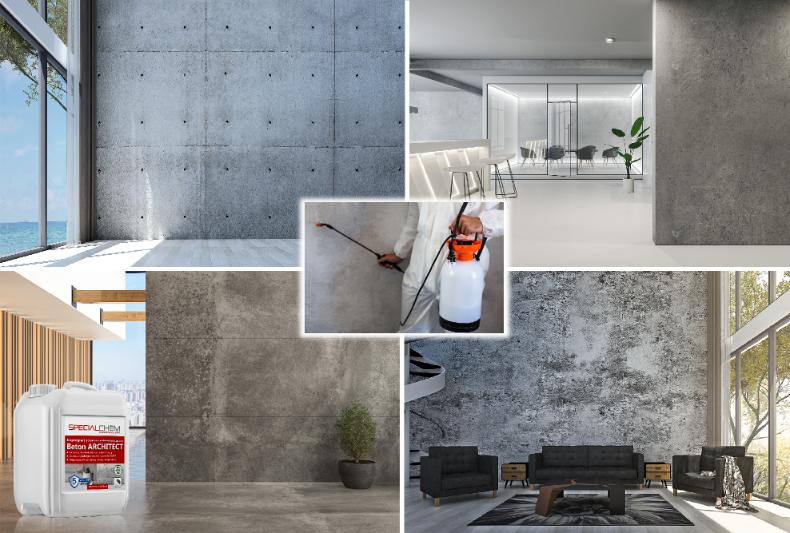
SPECIALCHEM Beton Architect Architectural Concrete Impregnator is an innovative, water-based protective agent based on next-generation nanotechnology. It was specifically designed for impregnating smooth, high-density concrete, including classes C25, C30, and C35. The agent provides effective protection for concrete surfaces against water, dirt, and the harmful effects of weathering. It is ideal for surfaces exposed to heavy use, such as sidewalks, floors, facades, and parking lots. Thanks to its silane nanoparticles, the agent deeply penetrates the concrete structure, creating a durable, hydrophobic protective barrier that does not change color, texture, or surface finish. The product is non-slip, non-glossy, and fully vapor-permeable, making it an excellent choice for modern architecture. Main advantages of SPECIALCHEM Beton Architect Architectural Concrete Impregnation: Protection against water and dirt – effectively blocks the penetration of moisture and dirt particles into the concrete Protection against chemical factors – resistance to road salt, acid rain and industrial pollution Easy to keep clean – impregnation facilitates cleaning and prevents permanent stains Increased frost resistance – reduces the risk of micro-cracks and material chipping at low temperatures High abrasion resistance – deep penetration of ingredients makes concrete more durable even with intensive use Wide range of applications – suitable for protecting walls, floors, sidewalks, precast elements and garden elements Applications of SPECIALCHEM Beton Architect Architectural Concrete Impregnation: Concrete facades and walls Pavements, terraces, parking lots and other horizontal surfaces Precast concrete elements such as fences and panels Flowerpots, monuments and decorative concrete accessories Industrial and utility floors with heavy traffic Technical properties of SPECIALCHEM Beton Architect Impregnation for architectural concrete: Effectively protects against salt efflorescence, moss and algae Does not affect the color and structure of the concrete – no greasy or glossy effect Does not cause slippage – safe for pedestrians and users Does not close pores – maintains the vapor permeability of the concrete High resistance to UV, rain, frost and changing weather conditions Minimizes the risk of surface degradation and reinforcement corrosion Surface preparation recommendations: To achieve maximum effectiveness of the impregnation, prepare the surface properly before application: To clean general dirt and deposits, use SPECIALCHEM BETON CLEAN In the case of rusty stains, we recommend using SPECIALCHEM RUST CLEAN In the case of white salt or lime efflorescence, we recommend SPECIALCHEM WYKWIT CLEAN Application method: Garden sprayer for large surfaces Roller or brush for details or small surfaces Instructions for use of SPECIALCHEM Beton Architect Impregnation for architectural concrete: Application temperature: above +5°C The surface must be thoroughly cleaned and completely dry Perform a test in an inconspicuous place before impregnating the entire surface Protect elements not intended to come into contact with the impregnator (e.g. glass, steel, wood) Amount of the preparation: apply only as much as the substrate can absorb – the excess should be spread or removed Second layer (optional): apply using the "wet on wet" method, i.e. before the first layer is completely dry Leave the surface to dry completely Rinse tools with water after finishing work Coverage of SPECIALCHEM Beton Architect Impregnator for architectural concrete: Consumption: 80–100 ml/m² 2 liters – sufficient for 20–25 m² 5 liters – sufficient for 50–62.5 m² 10 liters – sufficient for 100–125 m² Actual coverage depends on the type of concrete and application technique. SPECIALCHEM Architect Concrete Impregnator is a professional solution for long-term protection of concrete surfaces, ensuring effective impregnation, aesthetics, and resistance to extreme outdoor conditions. Using dedicated cleaning products from the SPECIALCHEM series before application significantly increases the durability and effectiveness of the protective effect.




 Товар из Польши


 Возврат по недоставке