Joom: Товар может вызывать аллергическую реакцию. Перед использованием ознакомьтесь с инструкцией и информацией на упаковке. Для получения дополнительной информации вы можете связаться с продавцом или производителем напрямую.
-----
Joom: Это устройство не заменяет профессиональный медицинский совет, диагностику или лечение. Перед использованием проконсультируйтесь с квалифицированным медицинским специалистом, если у вас есть сомнения. Продавец/дистрибьютор не несет ответственности за любые убытки, возникающие в результате неправильного использования, несанкционированных модификаций или использования вне указанных показаний.
-----
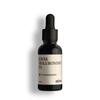
Product Metrics Raw Material for Industry : Aqueous Solution of Sodium Hyaluronate 2% INCL : Aqua, Sodium Hyaluronate, Leuconostoc/Radish Root Ferment Filtrate CAS Number 9067-32-7, 7732-18-5, 84775-94-0 EINECS Number 231-791-2, -, 283-918-6 Preservative System Used : Leuconostoc/Radish Root Ferment Filtrate Hyaluronic acid is a natural component of all tissues in the human body. In the skin, it constitutes up to 50% of its volume. It is responsible for the skin's ability to bind water, and therefore its firmness, elasticity... in short, its beautiful appearance. With age, the acid concentration in the skin decreases, resulting in sagging skin and wrinkles. Hyaluronic acid is very often used as an ingredient in creams, lotions, etc. Unfortunately, it is added in small amounts, therefore its effects are significantly limited. The hyaluronic acid sold here is in the form of a gel with an acid content of 2%. In cosmetics, we distinguish between two basic types of hyaluronic acid: high molecular weight and low- or ultra-low molecular weight. The hyaluronic acid we sell is a blend of high- and ultra-low-molecular-weight hyaluronic acid. It absorbs perfectly and reaches both the superficial and deeper layers of the skin, while maintaining maximum water-binding capacity. The hyaluronic acid solution we sell is produced in an antiseptic environment and packaged in packaging completely neutral to the acid. Hyaluronic acid is a biocompatible substance and does not cause any adverse reactions after application (irritation, allergies, burning). Directions for use The uses of this 2% solution are very wide; it can be used as an additive to creams, oils, and balms, and can also be a base or additional ingredient in many cosmetic formulas. When mixed with any cosmetic oil, we obtain an excellent serum. When applied to hair, it surprisingly quickly and effectively strengthens it (color-treated hair) and prevents split ends. When used on hair, in the simplest form, dilute it with water or add the acid to hair conditioner. Another method of using the acid solution is to apply it to the skin after applying other cosmetics (serums or retinoids), then the acid acts as a promoter, increasing the absorption of the ingredients through the skin. In turn, using it before applying other active ingredients (cream, serum, balm) reduces the risk of allergic reactions and other adverse effects. Chemical information: Hyaluronic acid (more precisely, an aqueous solution of hyaluronic acid salts) is a mixture of: high molecular weight sodium hyaluronate (HMW/MSDS) with a molar mass above 1 MDa (50%) and ultra low molecular weight sodium hyaluronate (ULMW/MSDS) with a molar mass less than 5 KDa (50%) Hyaluronic acid - a glycosaminoglycan (a type of polysaccharide), which occurs in all living organisms and belongs to the largest group of compounds having an identical chemical structure in both bacteria and humans. Hyaluronic acid is a biopolymer containing alternating D-glucuronic acid and N-acetyl-D-glucosamine units linked by β(1→4) and β(1→3) glycosidic bonds. Preserved preparation Leuconostoc/Radih Root Ferment Filtrate INCI: Aqua, Sodium Hyaluronate Storage information. Acid produced in the EU. Store in the refrigerator, do not freeze!!!


 Товар из Польши


 Возврат по недоставке