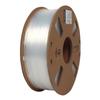
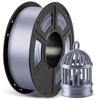
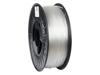
Anycubic TPU Clear Filament Transparent 1kg FLEXIBLE CHEMICAL RESISTANT Manufacturer: Anycubic Series: TPU Color: Clear, Transparent Weight: 1kg High flexibility – TPU can be bent at any angle. This filament is ideal for printing flexible and resilient models, such as insoles, phone cases, or wristbands. Exceptional durability – the filament is incredibly resistant to weather conditions, grease, and tears. Excellent layer adhesion – minimizes the risk of delamination, ensuring durable and flexible models. Filament characteristics: Anycubic TPU filament is a high-quality material designed for flexible and durable 3D prints. It's a soft and resilient material, making it ideal for printing flexible models like glasses cases, gaskets, and washers. Its resistance to weather, chemicals, and abrasion makes it ideal for 3D printing projects that require high durability. Parameters: Manufacturer: Anycubic Series: TPU Color: Clear Weight: 1kg Diameter: 1.75mm Length: 330m Density: 1.23g/cm³ Hardness: 95A Tensile modulus: 50.2MPa Flexural modulus: 87.6MPa Tensile Strength: 34.4MPa Elongation at Break: 697% Heat Deflection Temperature: 52 ℃ Recommended Printing Speed: 50-150mm/s Recommended Printing Temperature: 195-230℃ Recommended bed temperature: 50-60℃ Drying conditions: (8 hrs) 70-80 ℃ Water absorption saturation coefficient: 1.08% Usage information: Set temperature nozzle according to manufacturer's recommendations ( 195-230℃ ) Set the bed temperature according to manufacturer's recommendations ( 50-60℃ ) After printing wait for the bed to cool down to room temperature Remove the print from the platform and store the remaining opened filament in a dark and dry place General information: Stated print speeds may vary. Always follow the manufacturer's recommendations. The color and properties of the material may vary depending on the printing process and washing . filaments may experience changes in properties depending on storage conditions. Storing the filament in a cool and dry place can help maintain the stability of its properties. Properties strongly depend on printing parameters such as nozzle temperature, bed temperature, print speed, and infill density. There are many types of filaments such as ABS, PETG, nylon, and elastomers. Each has unique properties such as strength and flexibility. Filaments are available in a wide range of colors, allowing you to create a variety of projects. However, it is worth remembering that color intensity may vary depending on the manufacturer and product batch . Before using it is recommended to dry the filament. In the parameters section the lowest values of the print temperature and bed temperature are given. Additional information: Soft and very flexible - Anycubic TPU filament is very flexible, soft to the touch, and can bend at any angle. This makes it ideal for printing flexible models such as insoles, phone cases, and wristbands. Strong and Durable - Anycubic TPU provides incredible strength and tear resistance, outperforming conventional materials. Suitable for industrial applications requiring durability, such as gears and bearings. Excellent Weather Resistance - Anycubic TPU filament provides excellent strength and is resistant to chemicals (oils, grease) and weather conditions. Suitable for printing a wide range of outdoor models, such as car headlight housings, protective gear for athletic shoes, and seals. Vacuum packaging - effective protection against moisture and dust. FAQ - Frequently Asked Questions What applications is Anycubic TPU filament best suited for? TPU filament is ideal for flexible components that need to bend and return to their original shape. It is a popular choice for seals, covers, pads, cases, and shock-absorbing parts. Thanks to its elasticity, it is also suitable for components operating under load. Is Anycubic TPU resistant to oils and outdoor conditions? Yes, the material is characterized by good resistance to oils, greases, and operating factors. It is suitable for technical designs and components exposed to chemical substances. It is also resistant to abrasion and mechanical damage. What printing parameters are recommended for Anycubic TPU 1.75 mm filament? The recommended nozzle temperature is usually in the range of 195–230℃, and the bed temperature is 50–60℃. It is worth adjusting the print speed to the printer's capabilities, especially with Bowden systems. The final settings depend on the device model and print geometry. Should TPU filament be dried before printing? If the material has been in contact with moisture, drying is recommended. Recommended conditions are around 70–80℃ for several hours. Dry filament ensures more stable extrusion and better surface quality. Is TPU suitable for printers with a Bowden extruder? Yes, however, in Bowden systems it is worth reducing the print speed and calibrating the retraction accordingly. TPU is a flexible material, so it works best with stable filament feeding. Printers with a direct drive extruder usually have easier control over the material.

 Товар из Польши


 Возврат по недоставке