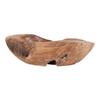
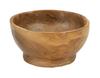
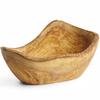
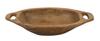
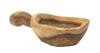
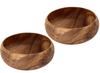
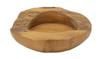
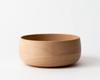
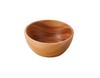
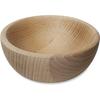
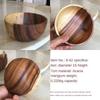
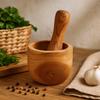
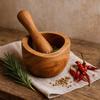
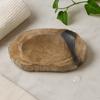
There is a particular quality to teak that you notice before anything else: the weight of it, and the warmth. This bowl, 20 cm across and 7 cm deep, has the kind of presence that earns its place on a table without trying. The grain moves in long, confident lines, deepening where the wood is densest, and the surface has a smooth, slightly oiled feel that invites a hand to rest on it.
Teak: a wood that lasts
Teak is one of the few timbers that genuinely improves with age. Its natural oils make it resistant to moisture and the small movements that cause other woods to crack or warp over time. A bowl like this, kept and occasionally oiled, will darken gradually and develop a patina that no new piece can replicate. The grain you see now is only the beginning of what it will become.
Form and presence
The bowl is turned to a clean, open profile, wide enough to hold fruit, keys, or a handful of objects, deep enough to contain them without looking cluttered. The rim is smooth and even, the base stable. It sits well on a sideboard, a kitchen counter, or a dining table as a centrepiece that needs nothing added to it. The natural variation in teak's grain means each bowl reads slightly differently in different light.
Size and weight
20 cm in diameter and 7 cm deep, roughly the footprint of a dinner plate and about as deep as a cupped hand. At 840 g, it has a satisfying solidity when you pick it up, not heavy, but present.
Display and everyday use
It works as a fruit bowl, a catch-all near the door, or simply as a sculptural object on a shelf. Because the finish has not been confirmed as food-safe, treat it as decorative rather than as a vessel for wet or oily foods directly. For dry fruit, nuts in their shells, or loose objects, it is well suited.
Care
Wipe with a dry or barely damp cloth. Avoid soaking or leaving standing water in it, as prolonged moisture will work against even teak's natural resilience. A light rub with teak oil or food-grade mineral oil …
region of manufacture: Indonesia


 Товар из Великобритании


 Возврат по недоставке