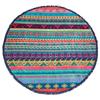
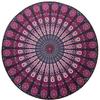
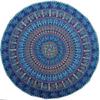
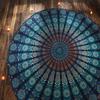
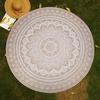
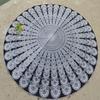
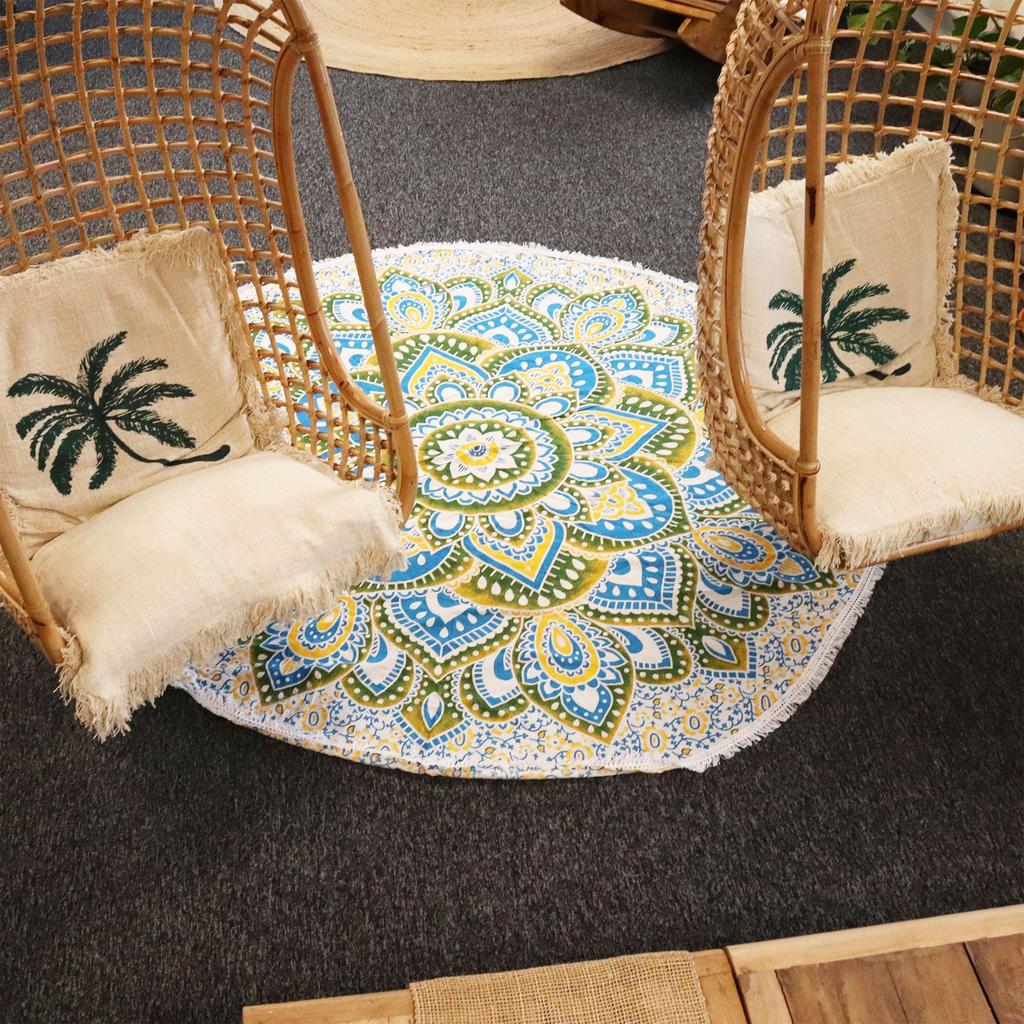
A large cotton wall hanging in yellow and blue, 180 cm across, built around a mandala motif with layered concentric petals and fine geometric detailing. It makes an immediate statement on a bare wall, the kind of piece that sets the mood of a room rather than simply filling a gap.
The visual impression
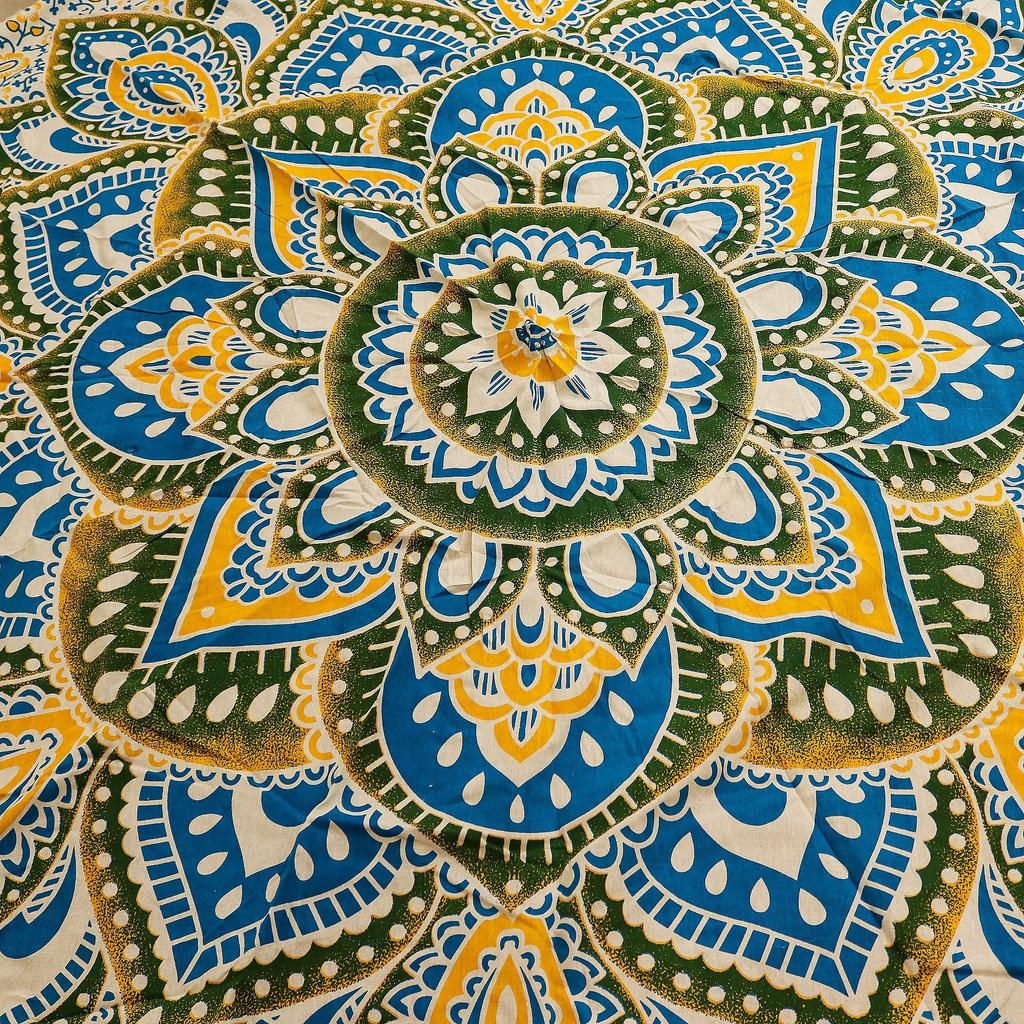
The palette moves between warm, sunlit yellows and cooler, steadying blues, a combination that feels both energising and calm in the same breath.
The mandala fills the full face of the cloth, so the pattern reads clearly from across a room, not just up close.
Layered petals radiate outward from the centre, each ring adding a new band of detail, the kind of geometry that rewards a longer look.
Cotton softens the visual weight of a large print; it absorbs light rather than reflecting it, so the colours feel warm rather than flat.
At 180 cm, it covers a significant stretch of wall, wide enough to anchor a sofa, a bed head, or an empty dining wall on its own.
Cotton, at this scale
The hanging is made from cotton, which behaves differently on a wall than a paper print or a synthetic fabric. It drapes with a slight natural give, sits quietly against the wall without static, and the weave gives the surface a gentle texture that catches light softly. A textile at this size also has a mild acoustic effect, fabric absorbs sound in a way a framed print cannot, which makes a difference in a room with hard floors or bare plaster.
The weight is 154 g, so it hangs flat without pulling or bunching when properly supported.
The mandala, a circle that maps a cosmos
The word 'mandala' comes from Sanskrit, meaning circle, and the form has been used across Hindu and Buddhist traditions for centuries as a diagram of the cosmos, a way of representing wholeness, order, and the relationship between the centre and the whole. In Tibetan Buddhist practice, monks create intricate sand mandalas as a meditative act, each ring of pattern built outward from a single central point.…
region of manufacture: India



 Товар из Великобритании


 Возврат по недоставке