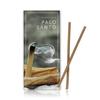
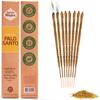
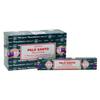
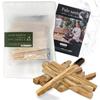
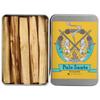
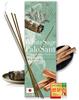
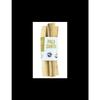
Bright lemongrass meets the warm, sacred-wood character of palo santo in these Peruvian incense sticks, made for moments when a room needs a clearer, more attentive atmosphere. The scent opens clean and citrus-green, then settles into a softer woody trail as the smoke thins.
The lemongrass and palo santo scent
Lemongrass gives the first impression: fresh, sharp and sunlit, like crushed stems between the fingers.
Palo santo brings a quieter base, with a dry, woody warmth beneath the citrus edge.
The pairing suits a desk, reading corner, yoga mat or evening reset, especially when you want scent without heaviness.
As the stick burns down, the brighter note softens and the woodier side lingers in the room.
It is a good choice if you like incense that feels clean, warm and gently ritual-led.
Peruvian incense with a woody citrus character
These are incense sticks from the Palo Santo Large range, with lemongrass giving lift and palo santo giving depth. The focus here is the scent itself: crisp, aromatic and grounded, with smoke that feels more spacious than sweet.
How to burn it safely
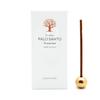
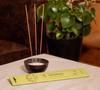
Incense sticks are usually lit at the coated tip, allowed to flame briefly, then blown out so the tip glows and releases smoke. Place the plain end in a heat-resistant incense holder or ash catcher, away from fabrics, draughts and anything flammable.
Burn in a ventilated space and never leave incense unattended. Let the ash fall onto a safe surface, then allow everything to cool fully before clearing it away.
Palo santo in context
Palo santo, often translated as ‘holy wood’, is strongly associated with aromatic burning traditions in parts of South America. Its appeal is as much sensory as symbolic: a dry, resinous wood scent that has become a familiar part of quiet home rituals, meditation spaces and small pauses between tasks. Paired with lemongrass, it feels less dense and more airy, keeping the warmth of palo santo while adding a brighter green edge.
Size and detai…
region of manufacture: Peru


 Товар из Великобритании


 Возврат по недоставке