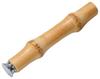
There is something quietly compelling about a whistle made from a single stem of bamboo. This one, shaped and finished in Indonesia, produces a bright, clear chirp, the kind of sound that makes a room pause for a moment and listen.
Sound and character
A short breath produces a clean, high note with a natural resonance, closer to a real bird call than most expect.
The tone varies slightly with breath pressure, so a little practice brings out different pitches and rhythms.
Bamboo gives the sound a warm, slightly hollow quality that plastic or metal cannot replicate.
Light enough to carry in a pocket, it is the kind of object you pick up without thinking and set down feeling a little more present.
Bamboo, shaped in Indonesia
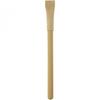
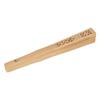
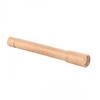
Bamboo is one of the oldest materials for acoustic instruments across South and South-East Asia, fast-growing, naturally hollow, and responsive to the smallest movement of air. This whistle is made from a single piece, keeping the grain intact and the weight low. At 38 g, it sits easily in the hand. The natural surface shows the characteristic nodes and pale straw colour of dried bamboo, with a finish that lets the material speak for itself.
A small tradition of calling to nature
Bird whistles have appeared across cultures for centuries, as shepherd's tools, hunting calls, theatrical effects, and children's first instruments. In Chinese opera, bamboo bird calls have long been used to evoke the natural world on stage. In Persian classical music, the nightingale's song is a recurring motif, often imitated on small flutes and whistles. The impulse behind all of them is the same: a human reaching toward the sound of the living world, one breath at a time.
Display and use
It works as a desk object, a windowsill curiosity, or a small gift tucked into a bag. Rest it on a shelf alongside other natural objects, it holds its own. To play it, simply blow gently across or into the opening and adjust the angle until the note sounds clear. N…
region of manufacture: Indonesia


 Товар из Великобритании


 Возврат по недоставке







![[Посуда для чайной церемонииЧакэн] Пестик Чакэн (Белый бамбук)](https://img-edg.joomcdn.net/93c234a9e7398a84c98bd4cffea4b66c3adb8f5d_100_100.jpeg)
![Белый бамбуковый часен с палочкой для перемешивания (Подарочная подушка) 14,5 см Бамбуковый [Белый бамбуковый венчик-мадлер] Посуда для чайной церемонии Белый бамбуковый венчик-мадлер](https://img-edg.joomcdn.net/46774b3d85c3a2e083315f1cac1a0b2237f40523_100_100.jpeg)