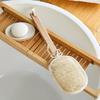
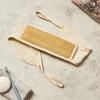
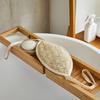
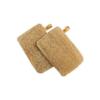
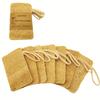
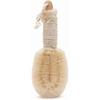
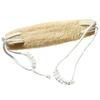
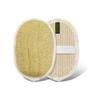
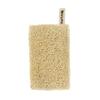
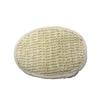
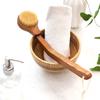
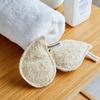
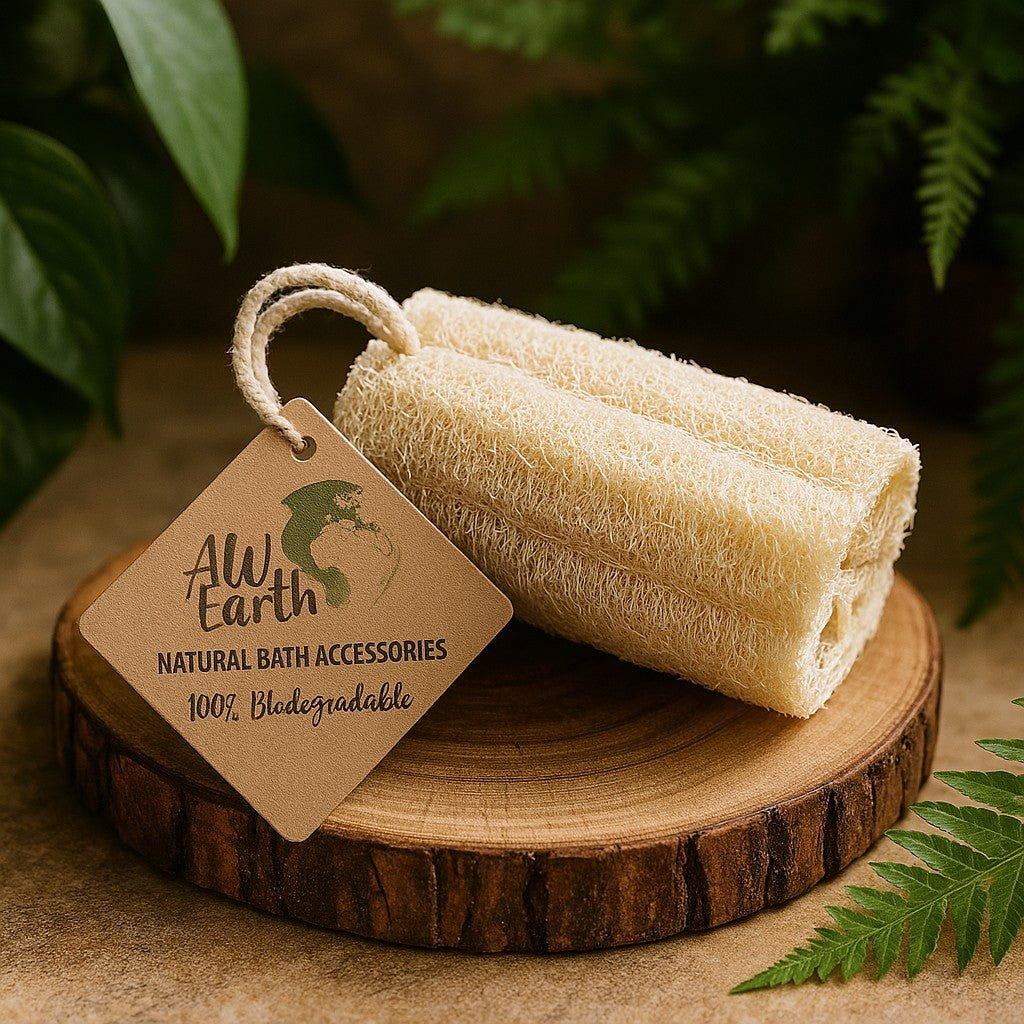
A natural loofah body scrubber turns an ordinary shower into a small textural ritual. Its pale plant fibres give that satisfying scratch-and-polish feeling on the body, while the cotton rope lets it hang within reach between washes.
The feel against the skin
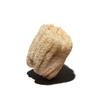
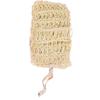
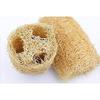
The surface looks open, fibrous and gently coarse, made for a more tactile wash than a soft cloth.
It suits body exfoliation when you want to lift away surface dullness with a simple mechanical scrub.
The rectangular shape gives an easy grip in the hand, so pressure stays controlled rather than clumsy.
The cream-toned fibres have a clean, natural look that sits quietly in a bathroom or shower space.
The hanging rope keeps it off the side of the bath, giving air a better chance to move through the fibres.
Loofah fibres and cotton rope
Loofah is the dried fibrous skeleton of a gourd, not a sea sponge. Here it is paired with cotton rope, keeping the form simple: a textured plant-fibre scrubber with a loop for hanging.
The visible texture is open and slightly springy, with fine strands across the surface. It feels purposeful rather than decorative, made for the everyday rhythm of washing, rinsing and drying.
Using it well
Use it on the body with gentle pressure, letting the texture do the work. Keep movements steady rather than harsh, especially on areas that feel tender or newly shaved.
Avoid using coarse exfoliators on broken, irritated or very delicate skin. For the face, choose a softer cloth instead, as loofah is generally a body scrub texture.
Keeping it fresh between washes
Rinse it well after use, then hang it by the cotton rope where air can pass through it. Natural sponges and scrubbers dislike staying soggy, and good drying is the simplest way to keep them pleasant to use.
Replace it when the fibres lose their spring, hold odour, or no longer rinse clean. How long that takes depends on how often it is used and how well it dries.
A plant-based bathing tradition
Exfoliating cloths…
region of manufacture: China
ingredient: Loofah


 Товар из Великобритании


 Возврат по недоставке