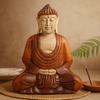
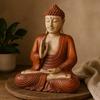
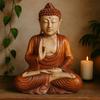
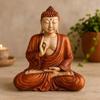
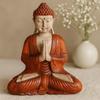
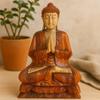
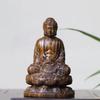
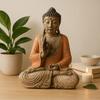
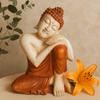
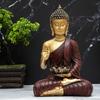
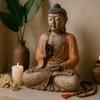
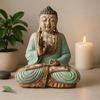
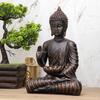
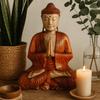
A hand-carved suar wood Buddha statue brings a quiet centre to a room, with the warmth of natural timber and the stillness of a seated form. The lowered hand gives the figure a grounded presence, suited to a meditation corner, shelf, console table or calm space at home.
The seated pose and lowered hand
The seated Buddha form feels composed and steady, giving the eye somewhere restful to land.
The lowered hand adds a sense of quiet weight, as if the figure is settled firmly into the present moment.
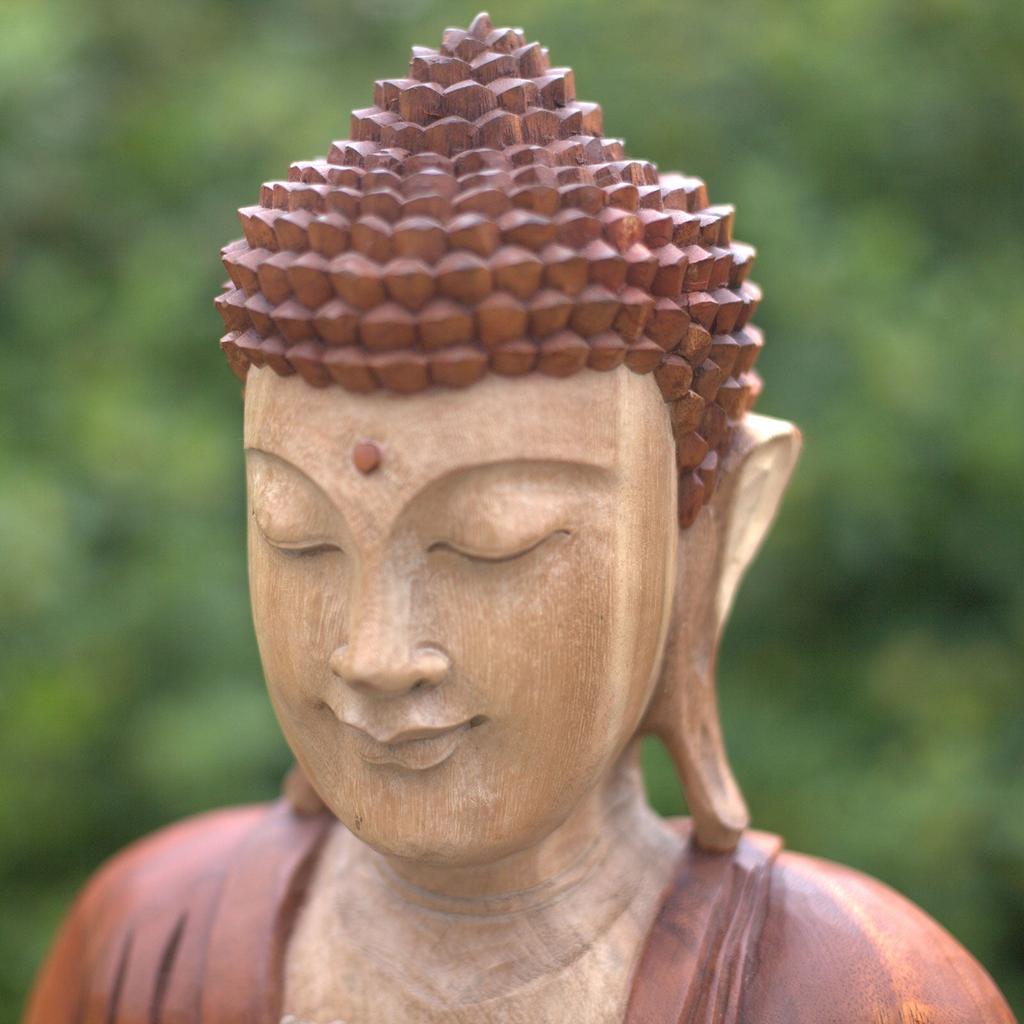
Carved folds, contours and facial detail create depth, so the statue reads as sculptural rather than flat décor.
The natural wood grain means the surface has movement and variation, with no two pieces looking exactly alike.
Its presence suits both a devotional setting and a thoughtful interior, without needing to dominate the room.
Suar wood shaped by Balinese carving
This statue is carved by hand from suar wood in Indonesia, using traditional Balinese tools and techniques. The process can take weeks, and the handwork gives each piece slight differences in expression, grain and carved detail.
Suar wood is valued for its warm tone and visible natural patterning. Here, the material keeps the statue feeling earthy and tactile, while the carved form gives it a more refined, contemplative character.
How to place and care for it
Place it indoors on a stable, level surface where the carved detail can be seen clearly. A quiet shelf, altar space, reading corner or hallway console all work well.
Dust gently with a soft, dry cloth. Keep the wood away from prolonged damp and strong direct heat, as natural timber responds best to a steady indoor environment.
The gesture in Buddhist context
In Buddhist art, seated Buddha figures often represent Shakyamuni Buddha in moments of meditation, teaching or awakening. A lowered hand is closely related to earth-touching iconography, where the earth is called as witness to the Buddha’s awakening. In a home, a statue like t…
region of manufacture: Indonesia




 Товар из Великобритании


 Возврат по недоставке