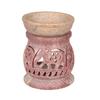
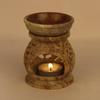
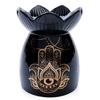
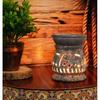
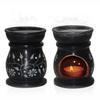
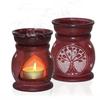
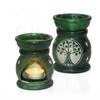
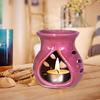
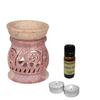
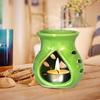
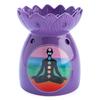
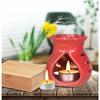
As the tea light catches, this soapstone oil burner turns a small flame into a quiet scent ritual. The top bowl warms gently, releasing fragrance into the room while the Hamsa design and layered colours bring a softly symbolic presence to a shelf, altar space or evening corner.
When the fragrance begins to rise
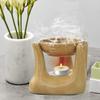
The open bowl is made for a little water with fragrance oil, or for wax melts and aroma granules.
A tea light sits beneath the dish, warming it gradually so scent can move through the space.
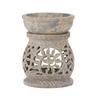
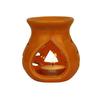
Small pierced openings around the body let the candlelight flicker through when lit.
The rounded soapstone form feels grounded rather than delicate, with a deep, earthy surface tone.
The Hamsa motif gives the burner a devotional feel without overwhelming the room.
Soapstone with a painted Hamsa design
Made from soapstone, it has a smooth, weighty feel and a carved-stone presence. The visible finish combines warm reddish brown, green, blue and purple tones, with the Hamsa hand set within a circular design on the front.
Soapstone is often chosen for decorative burners because it holds heat steadily and has a naturally soft, tactile surface. The colour and patterning may vary slightly from piece to piece.
How to use it safely
Place an unscented tea light in the lower chamber. Add a little water and a few drops of fragrance oil to the top bowl, or use a wax melt or aroma granules instead.
Keep the dish from running dry while the candle is lit. Use on a stable, heat-safe surface, away from draughts, fabrics and anything flammable. Let the burner cool fully before moving or cleaning it.
The Hamsa in context
The Hamsa hand is a protective symbol found across several cultures and faith traditions, including Jewish, Islamic and wider Middle Eastern and North African visual culture. It is often associated with blessing, watchfulness and keeping harmful influences at a distance. Here, it sits within the everyday ritual of fragrance: a small object for marking…
region of manufacture: India


 Товар из Великобритании


 Возврат по недоставке