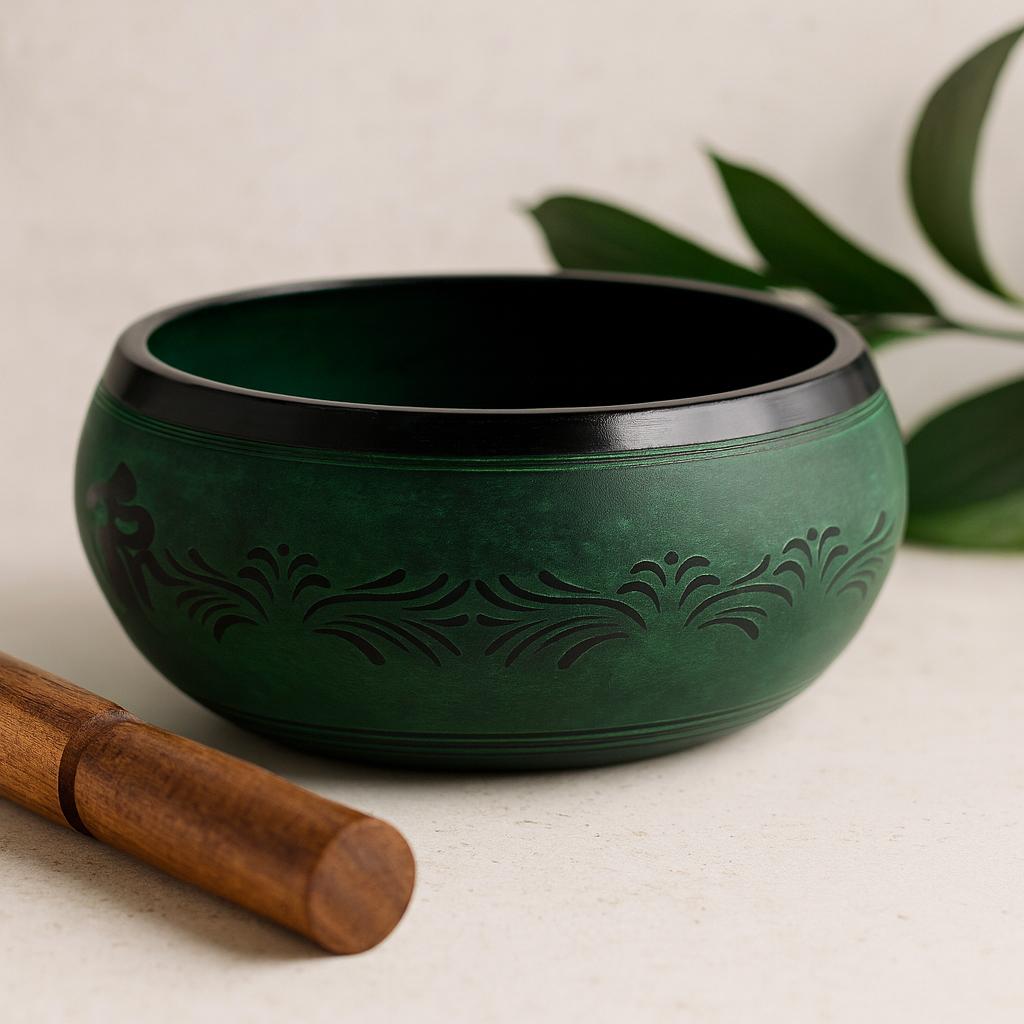
A weighty brass Tibetan singing bowl brings a deep, room-filling presence to quiet practice, sound work and mindful corners at home. Its moss green finish gives it a grounded, earthy look, while the extra-loud voice makes it suited to moments where you want the sound to carry clearly.
The bowl in the room
The green finish feels calm and natural, more like an object for a settled space than a shiny display piece.
Its substantial feel gives the bowl a steady presence before it is even played.
The brass body is made to resonate, with a tone that can be struck or built slowly around the rim.
It suits meditation, yoga practice and sound sessions where a fuller bowl sound is wanted.
Left on a low table or shelf, it works as a sculptural ritual object between uses.
Brass with a moss green finish
The bowl is made from brass and finished in rich green tones. The colour softens the metal visually, giving it an earthy, contemplative character that sits well with wood, stone, linen and candlelight.
Playing the sound
Strike the rim gently to hear the bowl open, then let the vibration fade without rushing it. To make it sing, move a suitable wooden striker around the outer rim with slow, even pressure. Rim playing takes patience, especially with larger bowls, but the sound grows as the metal begins to vibrate under steady contact.
Using it in practice
Place the bowl on a stable surface or hold it securely in the palm while playing. Use it to mark the beginning of meditation, to close a yoga practice, or to bring a clear sound into a quiet room. Keep the movement unhurried, and allow space between strikes so the resonance can settle.
Where the form comes from
Singing bowls are closely associated with Himalayan Buddhist practice and with the wider sound traditions of Tibet and Nepal. In practice, a struck bowl often marks a transition: the start of a sitting, a pause in a ritual, or the closing of a shared moment. The sound is valued for its gradual decay, w…
region of manufacture: India


 Товар из Великобритании


 Возврат по недоставке