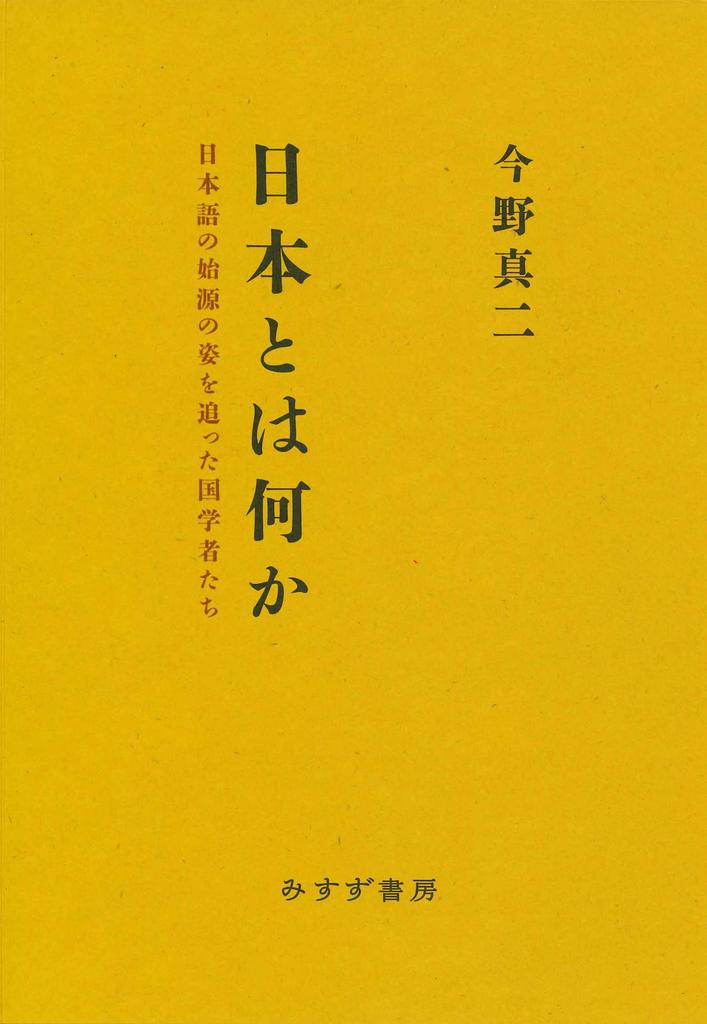
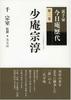
Four scholars of Japanese classics sought to uncover the "beginnings of Japan" by tracing the original form of the Japanese language.
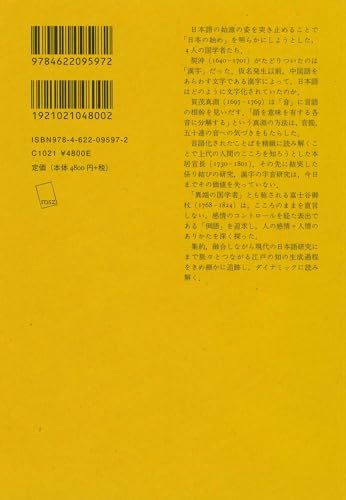
Keichu (1640-1701) discovered kanji characters. Before the emergence of kana, how was Japanese written using kanji, the characters used to represent Chinese characters?
Kamo no Mabuchi (1697-1769) saw the roots of language in "sound." His method of "breaking words down into meaningful sounds" led him to discover syllables, or fifty consecutive sounds.
Motoori Norinaga (1730-1801) sought to understand the minds of people in ancient times by meticulously deciphering the written language. His research into the use of kakumusubi (connections) and the pronunciation of kanji characters remains valuable to this day.
Fujitani Mitsue (1768-1824), also known as a "heretical scholar of Japanese classics," pursued "inversion," a style of expression that avoids speaking one's mind and instead involves controlling emotions, and delved deeply into the nature of human emotions.
This book meticulously traces and dynamically interprets the process of knowledge creation, which continues to this day through the convergence and fusion of ideas and concepts, and continues to inform modern Japanese language studies.
Table of Contents
Introduction: Edo Episteme
Two Epistemes / Reading Ancient Texts / Deconstructing Language / Approaching "Emotional Information" - Metalanguage and Waka / Exploring Imperial Court Studies through Sugoroku / Dynamic Interdisciplinary Studies in the Edo Period / Motoori Norinaga's Universe
Chapter 1: Keichu the Philologist
1. Keichu's Study of the Manyoshu - Organizing Manyogana
The Text "Shogo-Kariji-hen" / Current Methods and Keichu's Method / Various " "I can't read it" / Keichu's Approach - Close Reading of Chinese Classics, Study of Sanskrit (Siddham) / Distinctions Make It Perceived
2. Is the Waji Seiransho Written in Kana?
From the Manyo Daishouki to the Waji Seiransho / The Waji Seiransho - Arriving at Japanese as Translated into Kanji / Expressing Thoughts in Diagrams
3. Debate with Tachibana Shigekazu
Criticism of the Waji Seiransho - The Waji Kokin Tsurei Zensho / Keichu's Refutation - The Waji Seiran Tsuhan "Abridged" and "Waji Seiran Yoraku" / Truth and Waka Poetry
IV. Awareness of Etymology and Alternative Names: Reading "Enjuan Zakki"
On Etymology/On Alternative Names
Chapter 2. Kamo no Mabuchi: Perception through Experience and Intuition
I. "Kanji Ko"
Amatobuya/Nuegusa
II. Approach and Logic Based on Intuition
The Heart of the Ancients/Mabuchi and Norinaga
III. Composing and Understanding Poetry: Practical Interpretation
The Devoted Heart/Thoughts in the Heart Becoming a Song / Expression of Emotions
IV. Pioneer of Phonetic Interpretation Using the Japanese Alphabet Chart
Kana and the Japanese Alphabet / A Phonetic View of Word Structure / Networks of Knowledge / Theory of Contraction and Erosion / Tonight's Moonlit Night / Conclusion
Chapter 3: Motoori Norinaga
I. Grammar Diagrams - "Te Ni O Ha Himo Kagami"
Becoming Aware of "Kari Musubi" - Transmission from the Middle Ages to the Edo Period / Observing "Te Ni O Ha Himo Kagami"
II. Showing the Pronunciation of Kanji Characters Using Kana - "Zion-Kariji Yōkaku"
"Kana-Tsukabi" and "Zion-Kariji Yōkaku" / Writing Chinese Words in Kana / Expressing the Sounds of Chinese Characters in Kana
3. Colloquial Language as Metalanguage
Metalanguage - Explaining Language with Language / Acquiring Metalanguage / The Metalanguage of "Kogon" and "Ridōgon" - Fujitani Mitsue's "Shiba Shinga" / Textual Adherence / The Concrete and the Abstract in Texts / Japanese Language Outside the Japanese Archipelago - Okajima Kanzan's "Tanghua Sanyō" / Various Japanese Languages Within the Japanese Archipelago Language - Koshigaya Gozan's "Butsurui Shoko"
IV. Norinaga's Method - "Kokinshu Enkyo"
Overview of "Kokinshu Enkyo" / Understanding Humanities / "First Meeting" with Mabuchi / Writing in the Margins / Norinaga's Readings / Putting Human Feelings and Emotions into Words / Methods of Classical Literature Study - From Ogyu Sorai to Mabuchi and Norinaga
V. Debate with Ueda Akinari - "Kakari-gaya"
Overview of "Kakari-gaya" / The Debate in the First Volume of "Kakari-gaya" / Nationalism and Logicality The Position of Spoken Language / Conclusion
Chapter 4: Fujitani Mitsue's Theory of the Inversion of Kotodama
1. A Heretical Scholar of Japanese Classics
Mitsue's Lifetime / Undifferentiated Texts / Mitsue's Evaluation in the 20th Century
2. Pursuing "Makoto" (True Words) through Poetry
The State of the Human Mind / What Poetry Means to People – "Shingonben" Theory of Poetry / "Practice and Training" in Poetry – "Kado Hituisho" / The "Light" Illuminating the Classics
3. Various Linguistic Findings
The Six Lucky Fortunes / Focusing on Ayui (leg knots) - "Ayuhi Sho" and "Haikai Tenjiha Sho" / "Waka Irehimo" / Colloquial Language as a Metalanguage - "Shiba Shinga" / Communicative Language and Poetic Language
IV. The Theory of Kotodama Inversion
Conclusion
Final Chapter: Poetic Language and the Japanese Scholars
What Japanese Scholars Do When They Compose Waka Poems / Motoori Norinaga's "Shin Kokinshu Mino no Iezuto" / The "Sense" of "Continuity" among the Japanese Scholars / Closeness to Human Feelings / The Relationship between Human Feelings and Thought
Notes
Afterword